At Thingtesting, everything we recommend is independently reviewed. We may earn a commission on purchases made through our links.
Why Are There So Many Brand Collabs?
Brand collaborations used to be an occasional thing. But these days, hardly a week goes by without a new, wacky co-branded product popping up. What’s driving the collab economy?
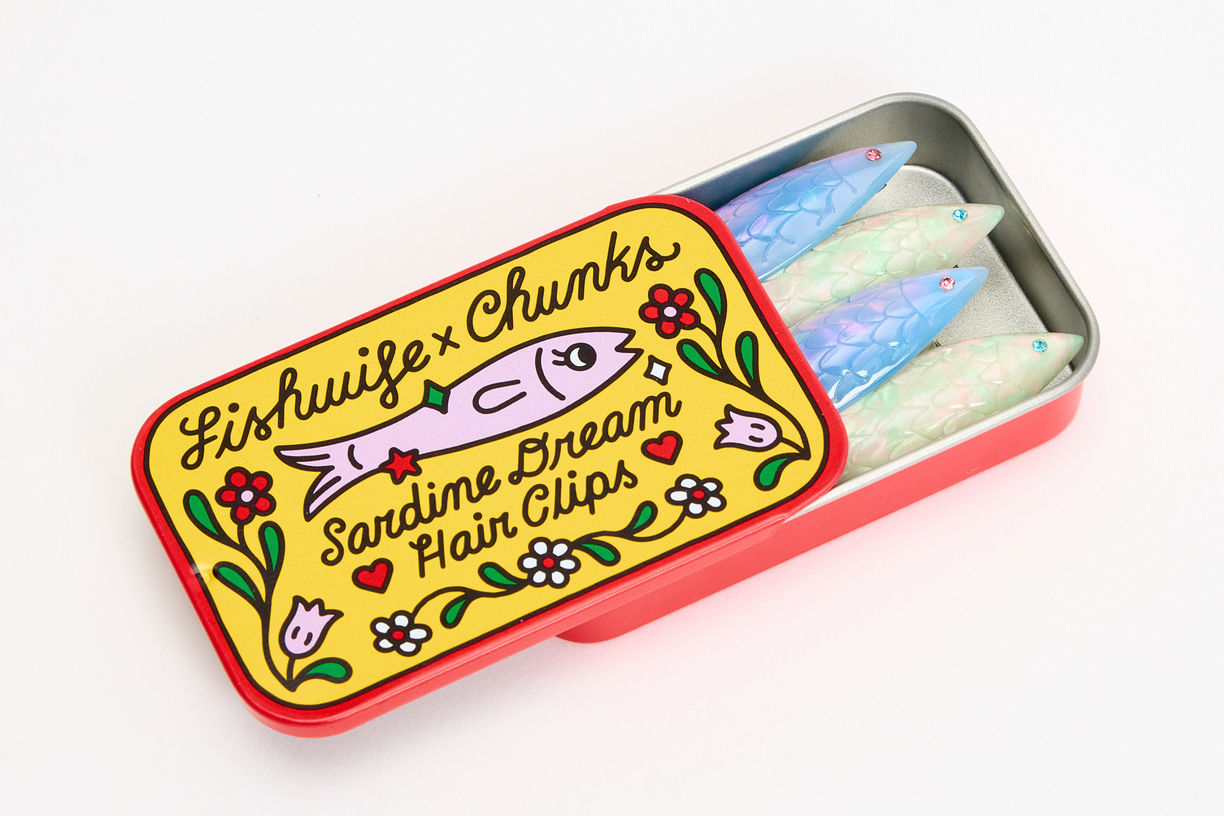
Hair clips, from your favorite tinned fish brand. (Image: Fishwife)
Right now, Becca Millstein is in the midst of a complex R&D process to decide which brands Fishwife, her tinned fish company, should launch new products with.
It'll be another year or so before we consumers find out who made the cut. But in the meantime, Millstein and her cannery will be busy figuring out if certain veggies can survive a dunk in the retort — the industrial pressure cookers used to sterilise tinned foods — or if a surprisingly delicious recipe can be developed with [REDACTED] brand’s sauces.
“We love to do collaborations, probably too many,” says Millstein. “We’re a DTC brand with a large email and SMS list, and a large social following. So we like to take advantage of those pools of data.”
Millstein is referring both to Fishwife’s pull as a brand partner — it has almost 300,000 Instagram followers and 500,000 email and SMS subscribers — and the hive mind it has built by positioning itself as a tinned fish brand for the modern, millennial woman.
Each January, around 3,000 customers respond to a brand asking, among other things, which other brands they'd like to see Fishwife collab with. The 150 or so suggestions get whittled down by what makes sense, which brands are actually interested, and what can survive a rigorous recipe testing process with a tasty product.
The whole process can take anywhere from four months to two years, and results in roughly two big partnerships per year (a new tinned fish product, or a more experiential pop-up), along with two smaller collaborations per quarter (merch and other products). Over the past 12 months, Fishwife has partnered with content creator Toni Bravo, launched a bundle with textile brand Block Shop, run a giveaway with cracker brand Firehook, re-released an anchovy vermouth with Veso, created an anchovy lemon butter with Churn, and teased a Glossier collab as an April Fools joke (comments suggest this might not actually be a bad idea).
The Era of Collabonomics
Collaborations have become a core marketing strategy for brands, with some releasing so many that you'd think collabs were their reason for existing. It’s only May, but already Grillo’s Pickles has announced smoothies, lip balms, digital cameras, beers and dips as new co-branded products this year. Sunscreen brand Vacation has made products with Pepsi, Soft Services and Erewhon, and Olipop has experimented with gummies, sneakers, swimwear and hotel rooms.
The collab hype is real, even if the raw numbers don't always add up. The costs of producing a collaboration product aren't always split equally, and the smaller brand can find themselves carrying the heavier end. Chozick cites an example of a brand funding production of a limited edition product, paying wholesale prices for their much larger partner's product, and bundling them together for sale. In return, they got a few Instagram posts.
But for brands, collabonomics itself is less about creating steady revenue streams and more about building buzz and brand equity. And the wackier the collaboration, the more press tends to follow.
“It’s hard, especially in the direct to consumer space, to generate new buzz and media clippings, unless there’s a launch of a partnership,” says Emma Chozick, who runs brand consultancy Gr8 Collab (and used to be Thingtesting's head of community and curation). The hype brands are chasing is of the genre streetwear brands like Supreme created, bolstering credibility through association with carefully selected partners. “They created this obsession with new drops and partnerships.”
Potential peril lies in a brand misjudging how the partnership fits. If the audience overlap isn't there, no amount of hype will move product. "It's clear when a partnership does well, because the brands will continue to work together," says Chozick. "But it's not always the case. Sometimes brands lean on partnerships and it can dilute [them]. You have to make sure you're clear on what your world is, and that you're plugging in brands which enhance that."
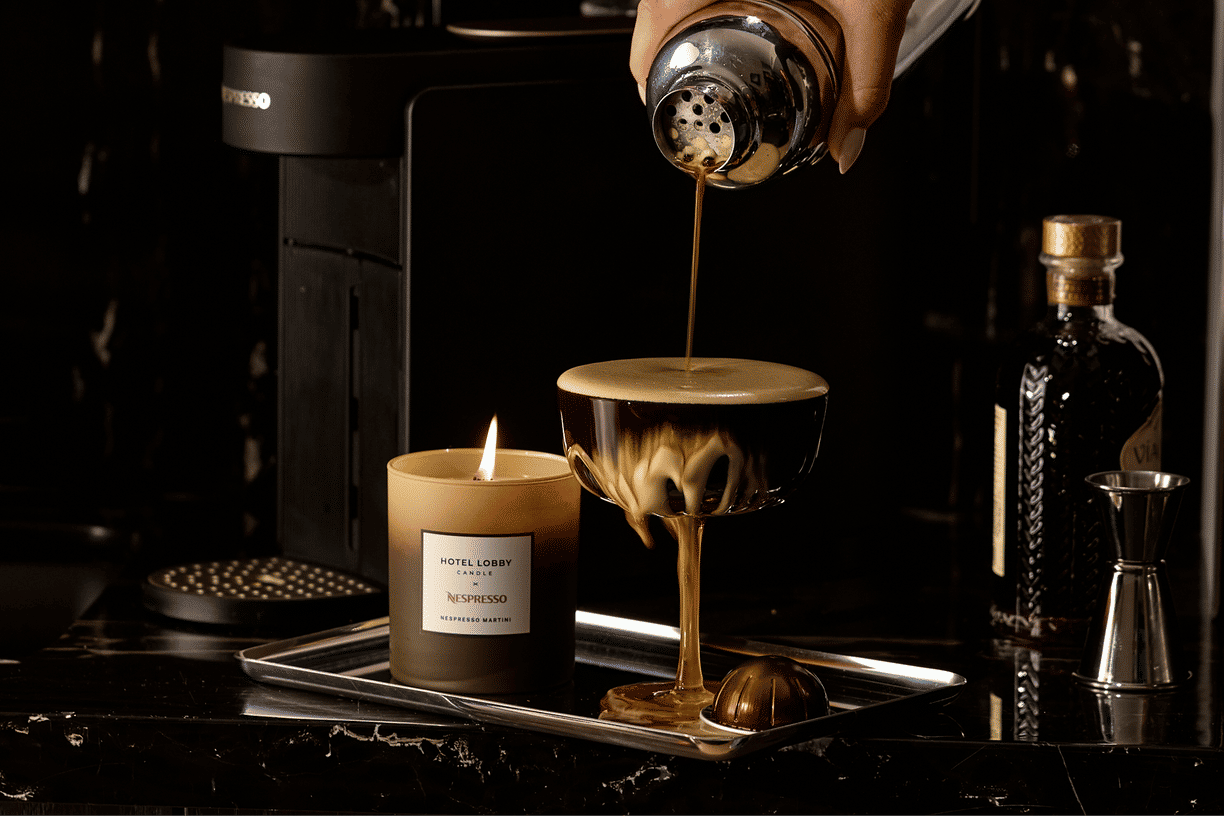
Hotel Lobby Candle recently collaborated with Nespresso. (Image: Hotel Lobby Candle)
Collabs in Practice
Smaller partners often shoulder most of the practicalities, too.
At Hotel Lobby Candle, founder Lindsay Silberman will pitch collaborations herself — including cold-contacting the Nespresso team via Instagram, which led to the brand’s most recent partnership. Once a partner says yes, her small team typically handles everything from scent development, packaging, design and sampling to photo shoots and creative direction, while the partner's role is largely to provide approvals. “We're the ones doing all the heavy lifting,” she says.
The Nespresso collab still took nearly a year and a half, mostly due to the larger brand's internal sign-off processes. A more nimble partnership with Anthropologie went from brief to launch in around four months. The timelines, Silberman says, usually depends more on the partner than the concept.
She aims for one or two collaborations a year — enough to generate buzz and new customers, but not so many that it becomes the whole business. “I think of them as icing on the cake,” she says. “If we decided tomorrow we were never doing collaborations again, I don't know that it would greatly affect our bottom line.”
Which brings us back to the core philosophy of the collab economy. For Millstein, the calculus is clear: flagship products drive the vast majority of Fishwife's revenue and profit, but collaborations keep customers excited, engaged, and coming back. “A new cracker isn't a fun story," she says. "But a cracker plus a sneaker brand? That's weird, and people care about that.”
The dynamic feeds itself. Outlets are happy to cover something buzzier than a straight product launch, and brands following the coverage have accelerated the pace at which they partner up with other brands accordingly. Top of Millstein’s wish list right now are Cotopaxi for something outdoor themed, and Starface just to have fun. “Overall, collabs are a small percentage of our revenue,” she says. “It’s instinctual ROI.”