At Thingtesting, everything we recommend is independently reviewed. We may earn a commission on purchases made through our links.
What's in a $20+ Tube of Toothpaste?
New oral care brands want us to spend a lot of time and money on our teeth-brushing routines. What are they actually selling?
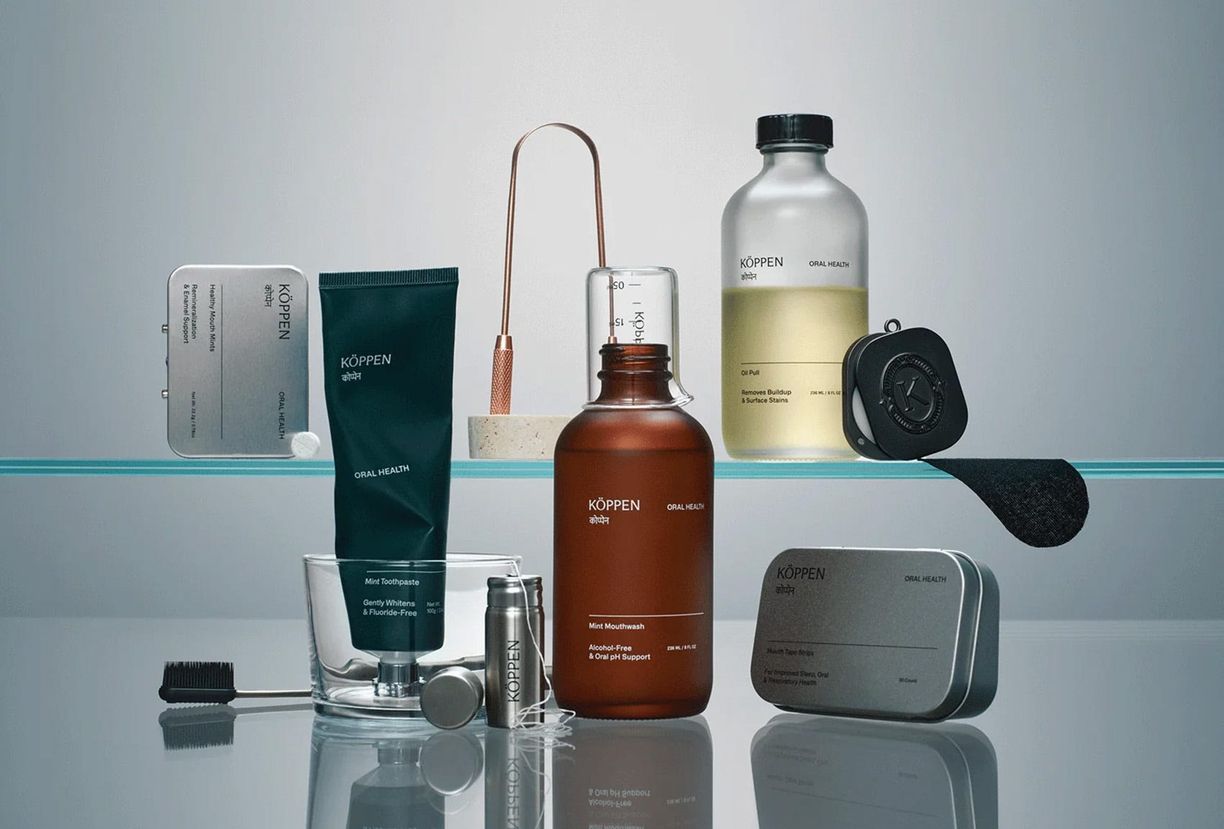
Image: Köppen
Oral care is having a moment. Over the past 12 months, we’ve seen the expansion of an Ayurvedic-inspired, Aesop-looking oral health system from Kõppen, teethbrushing repositioned as a ritual by Bastét, skincare-like pastes and polishes from Arame, scientific-sounding “biotic toothpastes” from Evenmouth, and more. Each brand has its own USP, but what unites them all is a belief that better ingredients are out there — and prettier packaging. But with prices starting at around $20 per tube, what are these expensive toothpaste brands actually selling?
It’s a trajectory that’s played out in other sleepy, sometimes boring categories. Toilet paper got its glow-up courtesy of brands like Who Gives a Crap and Bippy, who started packaging rolls like individual presents. Tampons now come in pleasing packaging with better-for-you promises thanks to the likes of August and Daye. Even air fresheners have been yassified. Toothpaste, on the other hand, remains one of the last commodities of our bathrooms. And those plastic $5 tubes are starting to look increasingly out of place in cabinets otherwise stuffed with Element Brooklyn soaps and Glossier skincare.
But it’s much easier to convince customers to switch tampons than toothpaste. Today, Colgate alone accounts for around 41% of the world's toothpaste sales. Freakonomics says the average person likely gets through 450 tubes in a lifetime, and because toothbrushing is a habit that starts in childhood, it’s hard to get shoppers to switch from the product their parents taught them to reach for twice a day. Asking people to spend significantly more, particularly when the formula, ingredients and philosophy may be unfamiliar, is a lot.
“It is a sticker shock,” Brittany Arnett, the founder of Arame, admits. “The premiumization comes from the quality of the products. But if it looks beautiful too, you’ll use it more and our mission is to get people to want to brush their teeth, and to make it an enjoyable experience.”
Salivating Science
Arame’s toothpastes, which cost $27 for 100ml, contain nano-hydroxyapatite, an enamel-building ingredient popular in European and Japanese dentistry, but which is not approved by the FDA for anti-cavity claims, unlike fluoride. The ingredient is currently having a moment in the spotlight among both dentists and consumers, who are excited about its potential to remineralize teeth, and is used by other brands including Bastét and Evenmouth. But it’s tricky to work with, and Arnett says she spent five years developing the formula, consulting with multiple chemists and dentists along the way. “It’s an expensive ingredient, and in order for it to be effective, you have to use a lot,” she says. “If I could lower the price [of the toothpaste], I totally would. But it’s just a more expensive product to make.”
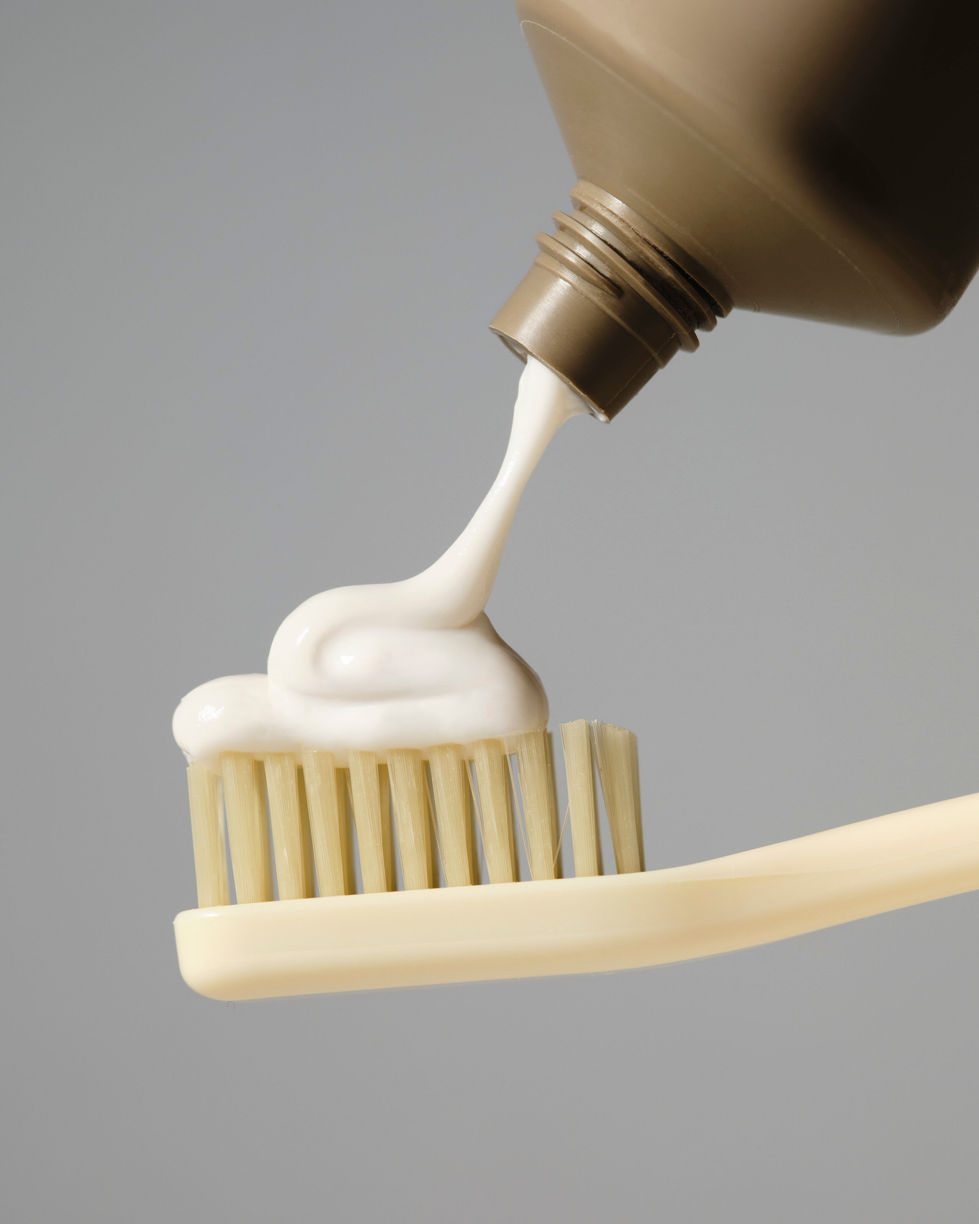
Arame's weekly tooth polish.
The brand’s approach to formulation is shared, to a degree, among the new oral care entrants, who see the mouth as a broader ecosystem, encompassing lips, tongue, teeth, gums and all, that is better off kept in microbial balance than blasted with strong chemicals.
Scientists agree that the mouth is home to more than 700 known strains of bacteria, making it one of the body’s most diverse microbiomes— and one that we have easy access to. By obliterating bacteria indiscriminately, protective strains become collateral damage, meaning we are actually more susceptible to things like dry mouth, which can cause cavities. As science around the oral microbiome continues to develop, legacy toothpaste brands may find themselves in an increasingly tricky spot, having already staked claims to fluoride and minty freshness.
“I saw this true white space in oral care,” says dentist Eve Lofthus, who is also the founder of Evenmouth, which sells an $18 toothpaste. “These bigger companies are understanding that the microbiome is the way to go, but they have the same problem that Coke or Pepsi has, where they don’t have the credibility to create an Olipop.”
Evenmouth’s formulas claims to be the first and only to include the bacterial strain S. Dentisani 7746, which produces peptides that fight against bacteria and pathogens that can cause cavities and gum disease. The strain is well researched, with more than 10 clinical studies and publications supporting it. Lofthus says this is the kind of science could help shift the perception of brushing as something that’s simply done for hygiene reasons to being considered a form of preventative healthcare. After our call, she shares a link to a studythat people who use mouthwash (which Lofthus says kills good bacteria) have a 55% higher risk of diabetes and pre-diabetes. “A healthy mouth is one with a balanced oral microbiome, as the bacteria in our mouth are responsible for also protecting our teeth and gums, much like the gut microbiome,” she says.
The Skinification of Toothpaste?
The oral microbiome is the scientific entry point that has enticed founders, but when talking to consumers, the pitch sometimes feels closer to skincare than health. Arnett previously worked as a beauty buyer at Bloomingdale's, and says she had her skincare ritual in mind when designing her oral care brand. Some of her products even borrow ingredients commonly associated with the skincare aisle, like hyaluronic acid to combat dry mouth, and papaya and pineapple enzymes that she describes as like “a chemical peel for your teeth.”
Köppen goes much further, with an oral care system split into three categories: detox, protect and support. The products are designed to be used throughout the day, from copper tongue scrapers and cold-pressed pulling oils in the morning, to bamboo silk floss, hydroxyapatite mints and lip balm throughout the day, and mouth tape that’s applied at night.
Founder Parag Shah points out that people repeat the act of brushing their teeth some 50,000 times throughout their life — and so it couldn’t hurt to elevate the whole thing a little. “Oral care is fundamental. It’s the most consistent habit we have, we’re going to do it until we die. But having something thoughtfully designed is also critically important,” he says. “People want products that are representative of who they are — and if they’re going to invest in something, they want it to look nice on their countertop. You know, if I have Aesop hand soap, I want something nice sitting next to it. Not a Colgate tube.”
Because the prices of these products are higher than your usual toothpaste, the look is important for getting people to buy in, as well as the science. Shah says Köppen spent two and a half years developing its complementary system of products. And when the brand posted the proof of concept for its copper tongue scraper in 2023, complete with its elegant, earthy travertine stone holder, it racked up over 10 million views and, eventually, 40,000-worth of sales.
The lesson was that if it looked great, people would buy it. “We’re in the early innings of consumer awareness around the mouth,” Shah says. “As consumers start to really understand that the mouth sits at this unique section of health and wellness, beauty and confidence, we’re going to see a new generation of premium brands emerge.”
These $20-plus premium tags, then, reflect the effort of reformulating a commodity product that hasn't changed in years, and the branding and packaging upgrade that's needed to convince customers it's worthy of a move from the drugstore shelves and into the more aspirational wellness aisles. What the price tag won't tell you, though, is how much has been spent on each.