At Thingtesting, everything we recommend is independently reviewed. We may earn a commission on purchases made through our links.
Founder Interview
Can oral care brand Bastét elevate toothpaste to the same status as skincare?
Thingtesting's Jenny Gyllander interviews Alexandra Baker about Bastét, a new toothpaste brand that believes that what you put in your mouth should be as considered as what you put on your skin
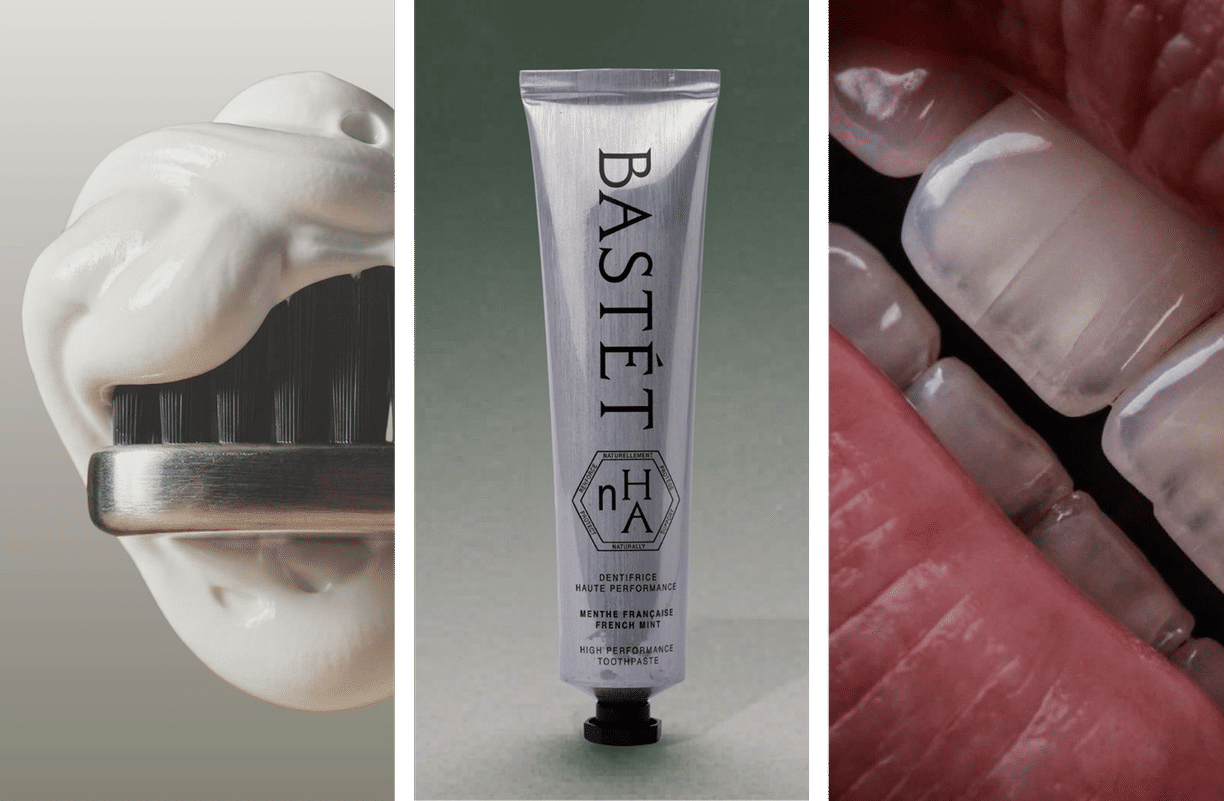
Images: Bastét
Entire brands have been built around skincare ingredients — think The Ordinary, Paula's Choice, and The Inkey List — so why don't we see the same pattern in other personal care categories, like toothpaste?
Bastét is a new brand that is applying this ethos to oral care, with products built around a hero ingredient called nano-hydroxyapatite, the mineral that makes up around 97% of your tooth enamel and which has been used in Japan for decades. The brand's first product is a custom-formulated toothpaste that took almost three years to develop and which is free from SLS, synthetic fluoride, and other ingredients Alexandra began questioning after her own health unraveled.
The name comes from the Egyptian goddess Bastét, who represented protection, pleasure, and good health. The brand takes itself seriously, combining real science with considered design. Its packaging is inspired by Scandinavian furniture makers and Italian architects.
I reached out to Alexandra because the oral care category is having a moment, and Bastét feels like a very different entry point. Where most brands in the space lead with clinical claims, Alexandra leads with ritual.
Jenny: There's a personal backstory to how this started. I'd love to hear it from you directly.
Alexandra: Years ago, I had some health issues I couldn't get any resolution on. Mainly eczema, and it was getting severe. Through that process, I learned to take care of myself more holistically and started caring about the ingredients I bring into my home and put on and in my body.
Oral care came to me because I couldn't find good replacements for what I was using. My family also has horrifying oral care stories. My mom had her two front teeth knocked out during a game of Red Rover when she was 14. My dad had bone grafting done with no anesthesia. So I grew up being very meticulous with my oral care, but I was never satisfied with the results. I'd do everything they told me to do and still get areas of concern, sensitivity.
Then I discovered products used in other parts of the world, centered on nano-hydroxyapatite. It makes up 97% of your enamel and 70% of your dentin, so it's already something in our body. When used in the right shape and concentration, it's incredibly effective at remineralizing teeth from the inside out. I built a new routine around it, went for my checkup, and two minutes in the dentist stopped and said, "I need to know what you're doing because I've never cleaned a mouth as clean as yours."
Jenny: How do you describe what Bastét is when someone asks you at a dinner party?
Alexandra: We say we are modern oral care designed for human systems. Toothpaste should do more than clean. It should protect, restore, and support your oral biome. Nano-hydroxyapatite goes into the cracks in your teeth and remineralizes them from the inside out. Heal and seal. Most other products work by creating a seal on top of your teeth. This heals from the inside out.
Jenny: Oral care is having a moment. Boka is going into Walmart. Other brands are expanding. What's happening in the category from your perspective?
Alexandra: People are disillusioned and want something more. Two big companies have controlled what we see on shelves for an incredibly long time. It makes sense that we're asking: is there something else? And why are the products we use to nourish our mouths so aggressively clinical looking? If you're going to invest in your health, that's an act of courage and ambition and should be reflected back to you.
Jenny: I find this balance between science and aesthetics really interesting. Brands like Colage and Crest aren't exactly focused on making the packaging beautiful, which as someone who is obsessed with that, it annoys me every morning and night. But there's also this education piece. Tell me about doing both at the same time.
Alexandra: We are a science-forward brand. But we've also included ingredients that feed the good bacteria in your mouth. The oral biome is the second largest biome in your body.
Jenny: Really? After the gut?
Alexandra: Exactly. One tagline is that bleeding gums are leaky gums, and leaky gums kind of mean leaky gut. They're that connected. Historically, clinical products looked clinical. Like warning signs. But we've changed as consumers. We have more ingredient literacy. So instead of looking scary, these things should look courageous and modern and beautiful, because they're representing how we want to feel. It's not tension. They're working in cohesion. Think about architecture: the foundation is the science, but the expression is the beauty. We want to pull back that curtain and give the agency back to the patient sitting in the dental chair.
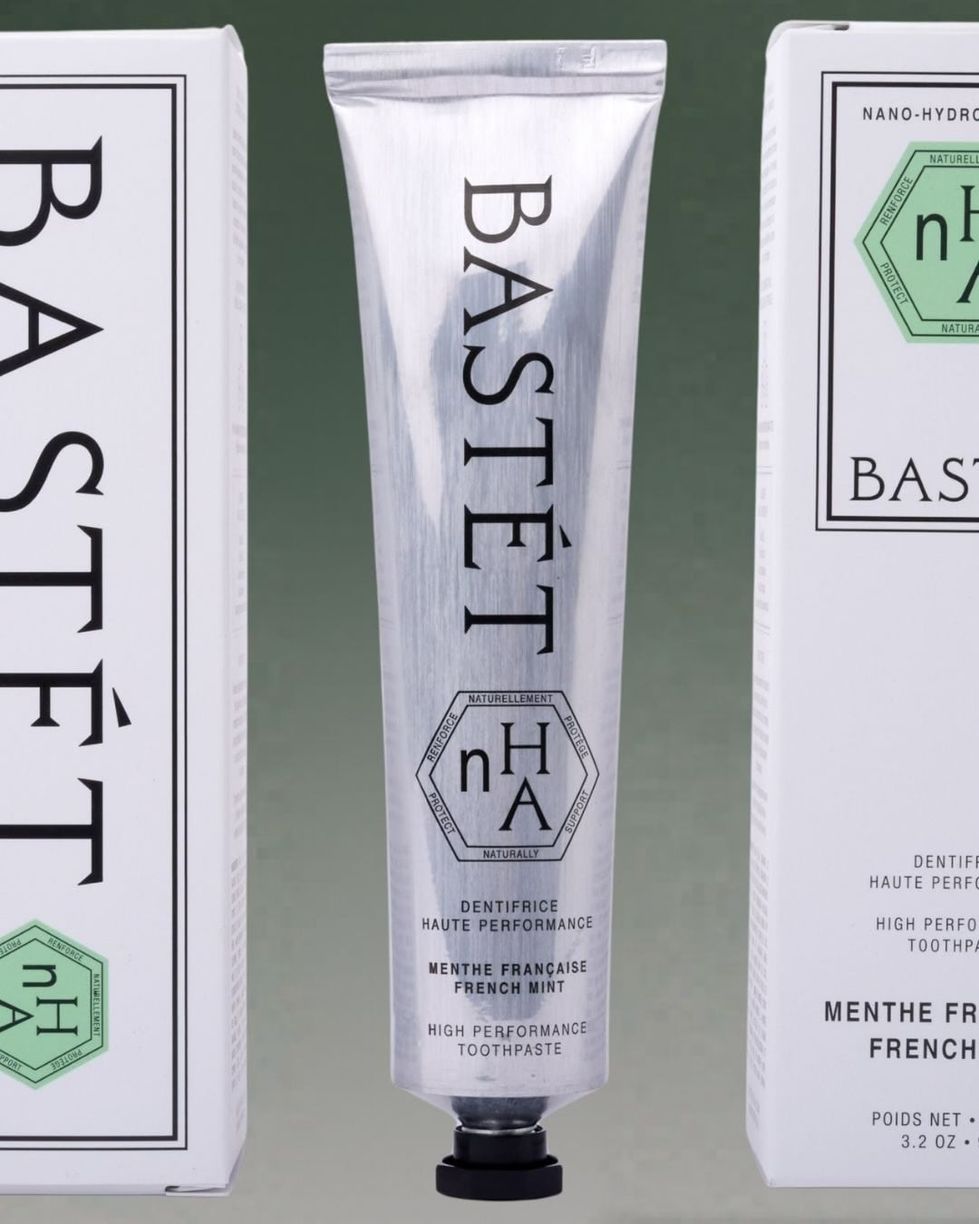
Image: Bastét
Jenny: What brands have you seen get this balance right, between science and a beautiful brand world?
Alexandra: BodyBio in supplements. The packaging isn't doing too much. It's very simple: we're a supplement brand, this is what we offer. I trust it. And Sofie Pavitt Face in skin care. She's created something beautiful and super science-based. She's not a scientist, but she really cares about skin. That's something we play to as well. I'm not a dentist, but I really care about this, and I'm doing the work.
Jenny: You spent years formulating this product. Tell me about that process and what you learned.
Alexandra: It took years to even find a lab willing to make what we wanted. Our hero ingredient is incredibly expensive and complicated to formulate. It needs to be non-clumping, evenly distributed, and come out the right way. Studies show 10% concentration gives the best results. A lot of other brands have only 2 or 3%, and at that level there's a risk your mouth's acidity disintegrates the ingredient before it can do the heavy lifting. Some brands also use micro-hydroxyapatite instead of nano, which is more affordable but not small enough to penetrate your teeth. We also had a firm list of ingredients we refused to include. We wanted to be as close to nature as possible, maximize bioactives, and include a seaweed-derived prebiotic called algin that feeds good bacteria.
Then there's the packaging. We use an aluminum tube, which is rare because most toothpaste is too corrosive for aluminum. Those tubes usually need a polymer lining inside. Ours does not, because there's nothing corrosive in our product. We should all pause on that, because it's going in our mouth. It took years, and we had to re-source parts because of the tariffs. But our brand needed to be exactly this, or we were offering something you could already buy from someone else.
Jenny: I notice you talk about building ritual around the product. Dianna Cohen from Crown Affair was really early with this in hair care, and I think she’s done such a stunning job. How do you think about that?
Alexandra: We often move through our days at a rushed pace, treating the essential acts of self-care as chores to be checked off a list. But our lives are built on the foundation of these small, recurring moments. When we choose to pause, a routine task like brushing your teeth transforms from a mechanical necessity into a restorative anchor. The Bastét Ritual is an invitation to reclaim four minutes of your day. It is not an aggressive act of maintenance, but a gentle ceremony of presence.
Jenny: Anything else people should know about taking care of their mouth?
Alexabdra: Two things I wish I'd been taught earlier. One: when you brush your teeth, no matter what you use, don't rinse. Spit. The product needs time to sit on your teeth to be effective. The goal is about 30 minutes. Just spit it out. Two: after you eat, try to wait 30 minutes before brushing, because you want the pH in your mouth to neutralize before you go in with any product. Those are free tips, and people should know them.
Brand spotting and product recommendations from Alexandra.
Jenny: Lastly, a quick fire round. A home or wellness recommendation for someone going through their own ingredient audit?
Alexandra: Care about your light environment. In the evenings I wear red light glasses if I can, and I try to keep my lights off. When you wake up, try not to turn on your bright lights. Try to get a little sunshine, even if it's gray outside. And then a lot of my products are really affordable. I use a lot of baking soda and vinegar. My laundry detergent is Biovert, a Quebec brand.
Jenny: A beauty or wellness brand whose packaging makes you jealous?
Alexandra: Fara Homidi's lip kits. So simple and so beautiful. I also just saw this nail care brand, Celisse. You look at it and you feel good. So chic.
Jenny: Most inspiring brands, architects and designers to you?
Alexandra: Vincenzo De Cotiis, the layered detail of Carlo Scarpa, and Axel Vervoordt's grounded, lived-in textures. For objects, we look to the functional permanence of Frama and the desert modernism of Donald Wexler, where utility is undeniable and aesthetic is secondary to soul.
Jenny: Canadian brands the world should know about?
Jenny: Home, wellness, or lifestyle product recommendations that helped you find cleaner solutions?
Alexandra: Salt and Stone soap, Maison Louis Marie candles, Saie and Westman Atelier for makeup.
Jenny: Dream retailer for Bastét?
Alexandra: Erewhon. When I was in California, I would go to Erewhon and look at the products available and wonder if there could be something more. A different look in that aisle.