At Thingtesting, everything we recommend is independently reviewed. We may earn a commission on purchases made through our links.
Founder interview
Would you pay $400 to Find Out What’s in Your Tap Water? ROSE Thinks So
Founders and dads Henry Ellis and Eli Bronner say their company ROSE can test for over 100 potential contaminants. But how much do people really need to know about their tap water?
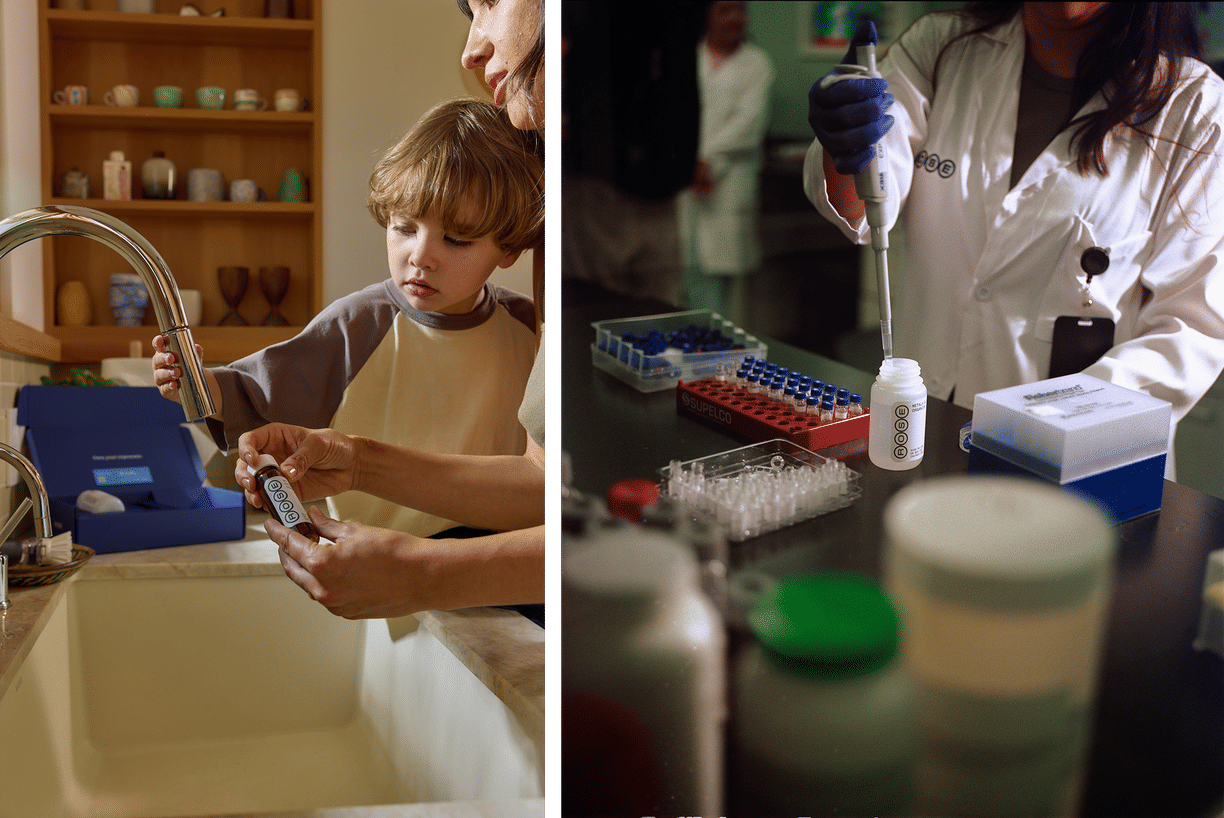
Image: ROSE
Henry Ellis is the kind of New Yorker who brags about how good the city’s water tastes. Still, after his son James was born, the water joined the long list of things a new parent lies awake worrying about. What, exactly, was he mixing into James’s formula? “He’s so fragile, so small,” Ellis says. “I thought, I should probably get something just to make sure it’s safe.”
After weeks of online research, Ellis watched a plumber install an under-sink filter at a total cost of around $350.
His wife had one more question. How do we know this thing, that we'll spend $1,000s on replacement filters for over its lifetime, is even working? “It was a good question,” Ellis admits. “I had no idea.”
His new company, ROSE, founded with college friend Eli Bronner, has the answer. Launching today, it sells a $399 kit to test home tap water for contaminants.
Customers fill two vials with their tap water and post them to ROSE's partner lab on the West Coast. Around two weeks later, they receive a report covering more than 100 contaminants, from PFAS to lead, arsenic, pesticides and the byproducts of chlorine disinfection. Each result comes with a plain-English explanation of what it is and what it might do to you, all informed by a scientific advisory board that includes John Warner, a founder of the green chemistry movement. The report also recommends how to deal with whatever has turned up.
ROSE's idea is that current methods for testing tap water don't address what happens in the last mile. Cities typically test water at the treatment plant, ROSE’s website points out, rather than your tap. Between the two, water travels through city pipes and then your home’s plumbing, where it can pick up contaminants, the founders say. They also argue that city water reports often leave out PFAS, the so-called forever chemicals. By comparison, Ellis and Bronner say, ROSE tests the water you actually drink or bathe in.
Exposure Health is Wealth
“Exposure health” is an emerging category as founders respond to consumer concerns about what environmental toxins might be doing to our health. After a decade of tracking steps and sleep, the wellness crowd is turning its attention to the water we drink, the air we breathe and the products we slather on. Post-Covid health anxieties, headlines about wildfire smoke and PFAS lawsuits, and biohacking’s move into the mainstream under the banner of longevity have all helped, too. “If you told us 10 years ago that people would be spending out of pocket on full-body scans, or even on home filters, we just wouldn’t have believed you,” Bronner says. Just last month, Neko opened its first US health-scanning clinic in New York, and visitors marked the occasion by posting photos of themselves in yellow robes, bathed in the scanner’s celestial light.
Parenthood is often what leads people to build in this category. “For the first time, you’re in charge of somebody else’s health and safety,” says Bronner, who has a son and daughter. It’s a familiar story in founder circles. Loonen, a glass-bottled water brand that raised $6m and launched in December, was founded by former VC Clara Sieg after pregnancy left her concerned about what might be in her tap water. Several of the new skincare brands targeting women through pregnancy and early motherhood tell similar stories of struggling to conceive and becoming convinced that environmental toxins played a role.
Ellis and Bronner, both 38, fit the profile. Both are parents, and both have a startup behind them. Bronner was a co-founder of health tech company Lua (acquired in 2018 by Life Biosciences), and Ellis was a founding partner and COO at non-alcohol aperitif brand Ghia. They are the affluent, wellness-literate millennials ROSE is building for. They have swapped out their plastic-coated dishwasher pods and purchased air purifiers, and give new hires at their 12-person company a personal “low-tox” budget to do the same. Ellis says the parallel with Ghia is that both brands found a community whose needs nobody was serving. This time, it seems it’s anxious parents.
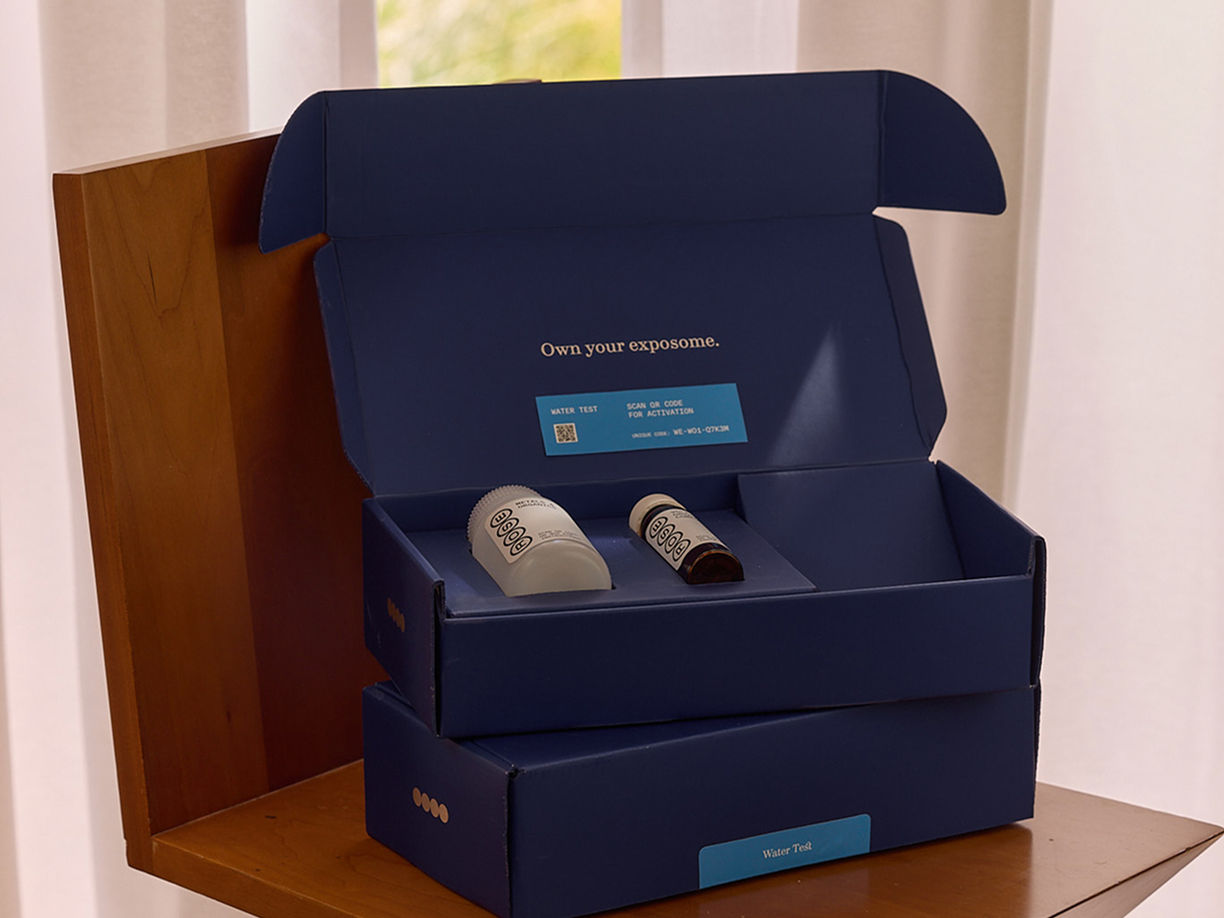
Image: ROSE
Muddying the Water?
The obvious question is whether any of this is necessary. US tap water is regulated, and for most people it’s safe to drink. The founders agree, but argue that their focus is on what happens after water leaves the treatment plant. ROSE also measures against stricter health-based guidelines rather than legal limits, which means it could flag water a city considers safe.
Like many of today's longevity brands, ROSE pitches itself as part of a much broader, societal health story. Early in our conversation, Bronner said that what a person is exposed to drives longevity “much more than genetics,” before then explaining how the kits work. Later, he connected ROSE's mission to falling fertility rates and research on phthalates, the chemicals found in everything from plastic packaging to beauty products. “It's not a coincidence,” he says. The science is less settled on what's causing fertility rates to drop, but studies have linked phthalates to some reproductive effects. One 2022 study pooling data from 16 US pregnancy studies found that higher phthalate exposure during pregnancy was associated with a greater risk of preterm birth. But most exposure comes from food and its packaging rather than tapwater, according to a review by researchers at Silent Spring Institute and Mount Sinai.
The tension for brands like ROSE is that fear sells, and a list of 100 tap water contaminants could make for frightening reading. The founders say they are aiming for the opposite: “to reduce anxiety,” as Bronner puts it, by making the unknown known. “I don’t think it’s healthy to doomscroll about potential issues.”
The results may well come back clean. When the founders asked their lab’s technical director what filtration setup he has at home, they expected a rundown of some elaborate system. In fact, he just drinks the tap water, because he knows it’s good.
For most people, it is probably fine. But for a new parent lying awake and wondering what’s in their baby’s bottle, $399 might seem like a reasonable price for one less thing to worry about.