At Thingtesting, everything we recommend is independently reviewed. We may earn a commission on purchases made through our links.
How Are Brands Still Selling So Many Reusable Water Bottles?
Water bottle brands are using collaborations, seasonal drops and limited-edition colorways to keep people shopping
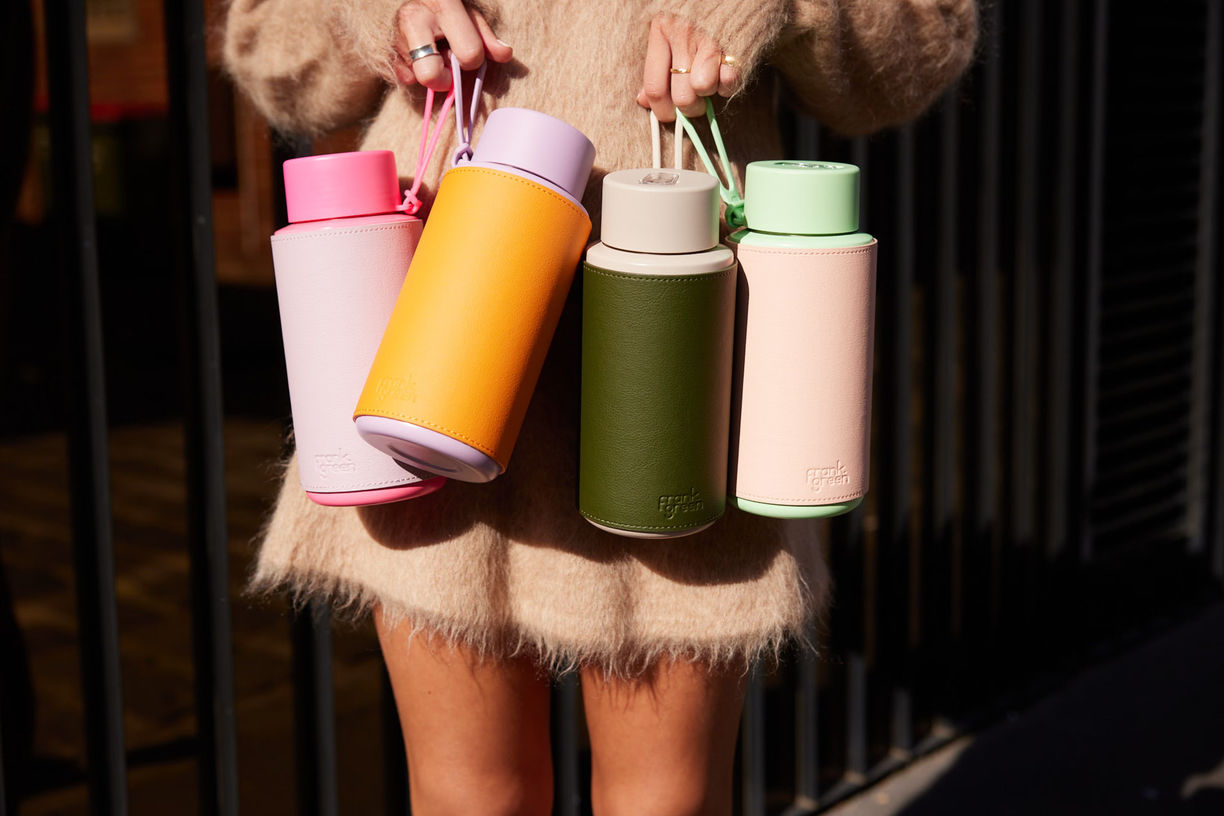
Image: Frank Green
There was a time, before the Stanley Quencher craze, that carrying around a reusable water bottle was more eco warrior than everyman. Now toting around a giant water bottle, or even hoarding them, is pretty mainstream behaviour. This year, Accio estimates that over $11bn-worth of reusable water bottles will be sold around the world.
But now so many of us own a reusable water bottle — a product originally intended to cut down our consumption of water bottles — how are brands continuing to sell so many of them?
In 2018, Taryn Tavella — then a trend consultant at WGSN, and now a brand strategist at Little Big Brands — was asked by Refinery29 about the rise of reusable bottles as status symbols. She rightly predicted the market would head towards collectibility, where people would own multiples of their favorite bottles, in the same way they do Labubus or sneakers.
“I credit TikTok,” she says. Six years ago, it “was still just a dance app”, Tavella explains, but it has since become a cultural force that sends trends ripping through society. There are 1.3 million videos tagged #waterbottle on the platform, where people show off their latest water bottle purchases, talk about their emotional connections to their water bottles, or post critiques about the number of water bottles people are purchasing (with multiple water bottles on display, naturally). Like so many other products, water bottles have become fodder for social media content, turning them into “something that’s covetable,” says Tavella.
After its Quencher tumbler went viral on TikTok, Stanley saw revenues increase from $73m in 2019 to over $750m in 2023. In 2022, reusable bottles from Australian company Frank Green water bottles started going viral according to Business Insider, with Google search interest peaking shortly after, and rising again this year. Owala, another viral water bottle company, has been pinching customers from Stanley, who had arguably been luring customers from Hydroflask. And then there’s the seemingly endless long tail of competitors selling cheaper copies.
Tavella says the challenge for brands today is how to keep hold of customers. A drip feed of collaborations, new colorways and seasonal drops is one tactic for keeping peopl primed to buy. In 2025, Frank Green collaborated with skincare brand Laneige to launch water bottles with lip balm holders. The partnership was so popular that the companies ran it again this year. “It’s about locking people in,” she says. “So when they do come back to replace [their bottle], they’re not like, oh, maybe I’ll try Yeti this time.”
The product reusable bottles set out to replace — bottled water — could also be finding a way to regain some cultural cachet. Glass bottles of ultra-filtered water from Loonen, which launched in December 2025, have been photographed with celebrities like Justin Bieber and Dua Lipa, the brand’s yellow-and-blue stickers on show. “You buy it, it comes with water, and you can reuse it,” says Tavella. “If the label stays on, and someone’s reusing that, people will see it and it starts to become remembered. I could definitely see that being something other brands could be inspired by.”
Asked where the business of water bottles might go next, Tavella expects brands to continuie pairing cultural cachet with genuine function, solving for problems beyond spills and portability and perhaps focusing on easy cleaning and filtration. But the irony of all this growth behind a product that was originally marketed as a way to reduce consumption can't be ignored.
“As a brand, you ultimately want sales,” Tavella says. “But it’s kind of sad. We’re not talking about sustainability as much as we used to in the world.”