At Thingtesting, everything we recommend is independently reviewed. We may earn a commission on purchases made through our links.
The Value of Slow, Hand-Made Products In a World of AI and Algorithms
Algorithms are flattening taste, and AI has created a world of slop. No wonder people are connecting to hand-made objects
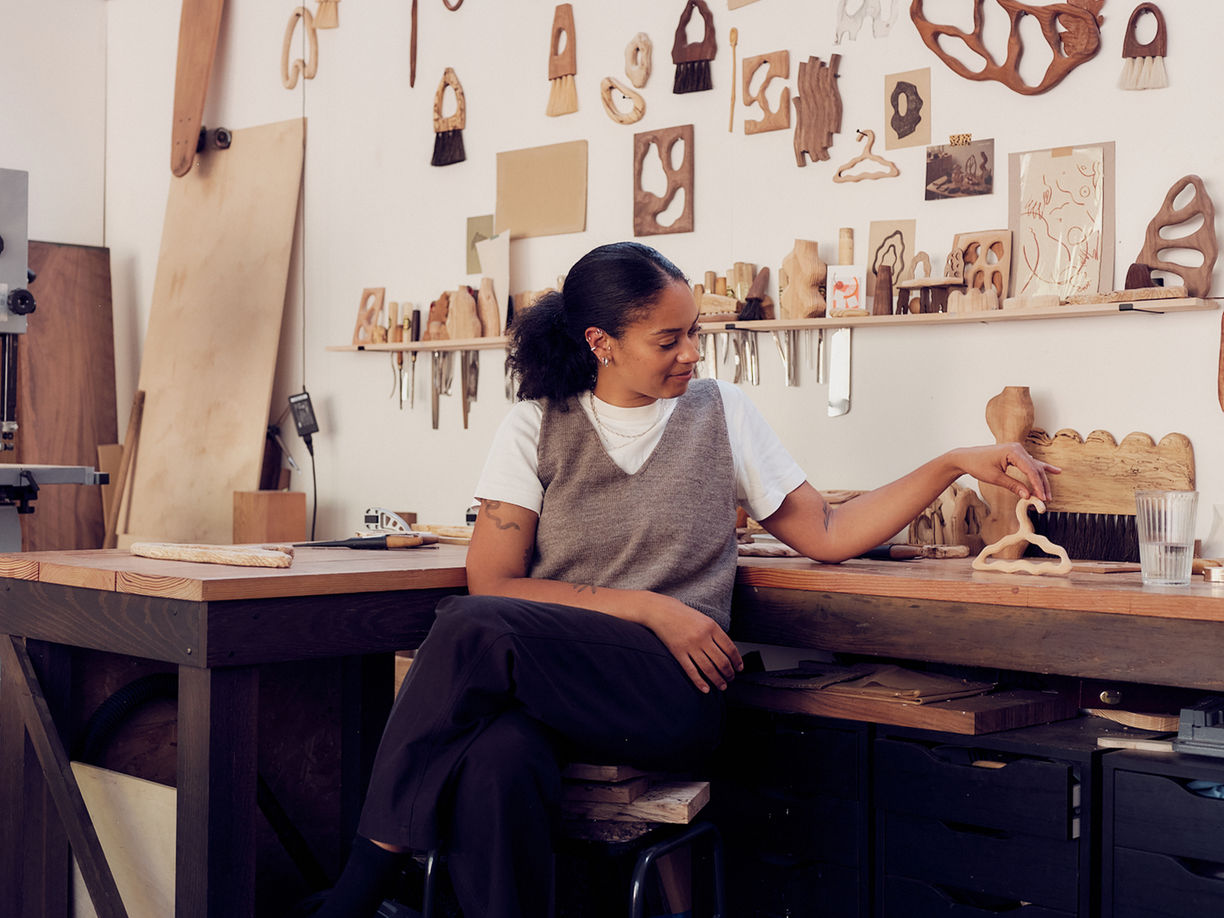
Sophie Sellu at her studio in South East London (Photo: Liz Seabrook)
Sophie Sellu, founder of homeware brand Grain & Knot, makes her products the slow way.
For several months each year, she closes the Grain & Knot webshop so she can get on with hand carving the next collection of 40-or-so objects she plans to sell, without the distraction of post office trips or customer queries. Her creative process is confined to a sketch book and intentionally screen-free. When she collaborated with Made.com last year, she laid paper designs for a side cabinet on her floor, rearranged them by hand, and sent a photo over to Made’s design team.
While people have been carving objects from wood for more than 400,000 years, Sellu’s approach is a novelty in a city where screen-based jobs dominate, and in a wider world where AI threatens job security and algorithms flatten creativity. In London, where Sellu is based, 46% of workers are in roles where AI could feasibly take over some tasks, according to a report by the Greater London Authority.
“I don’t even have the internet in my studio,” Sellu says. “It’s a no WiFi zone. I just want to focus on the making.”
She’s in good company. Waitlists still form around East Fork Pottery’s stoneware mugs, restocked weekly out of a factory in Asheville, North Carolina, and often gone within minutes. Candle artist Janie Korn hand-carves and paints wax into every shape imaginable, from olives to Chucky dolls, for an audience that treats each piece as a collectible that’s not for burning. Even the Labubu craze has a handmade angle: NYC artist Kerin Rose Gold made a name for herself by spending hours painstakingly applying rhinestones by hand to custom dolls for Naomi Osaka. Her brand, A-Morir Studio, sell its “Lablingblings” at a starting price of $250. Part of what shoppers are paying for is the knowledge that their object will be a unique original — and not seen on anyone else’s Instagram feed.
Although Grain & Knot has its own social media accounts, Sellu says she avoids browsing other woodworkers, in case she is inadvertently influenced. Sellu’s designs come in wobbly, wavy forms, such as coat hangers that wiggle into swan-like shapes, or domed brush handles that take on the appearance of textured tortoise shells, with bristly legs sticking out.
After more than a decade of direct-to-consumer sameness, algorithm-approved interiors and, now, AI-generated branding and nonsense slogans (What if forks were spoons? It’s cutlery.ai), it’s unsurprising that consumers are reaching for products that reflect our own one-of-a-kind identities. Chisel marks and bumps, which are missing from mass-produced products, are reminders that humans have been involved intimately in the process of creating and making. “I’ve always been drawn to things with imperfections and it’s one of the reasons I hand carve, because I want there to be a sign of life,” says Sellu.
According to Etsy’s Spring Summer 2026 survey, shoppers are actively seeking out intricately hand-made products products, with searches for handmade jumpers up 294% year-on-year, and wicker bags up 20,000%.
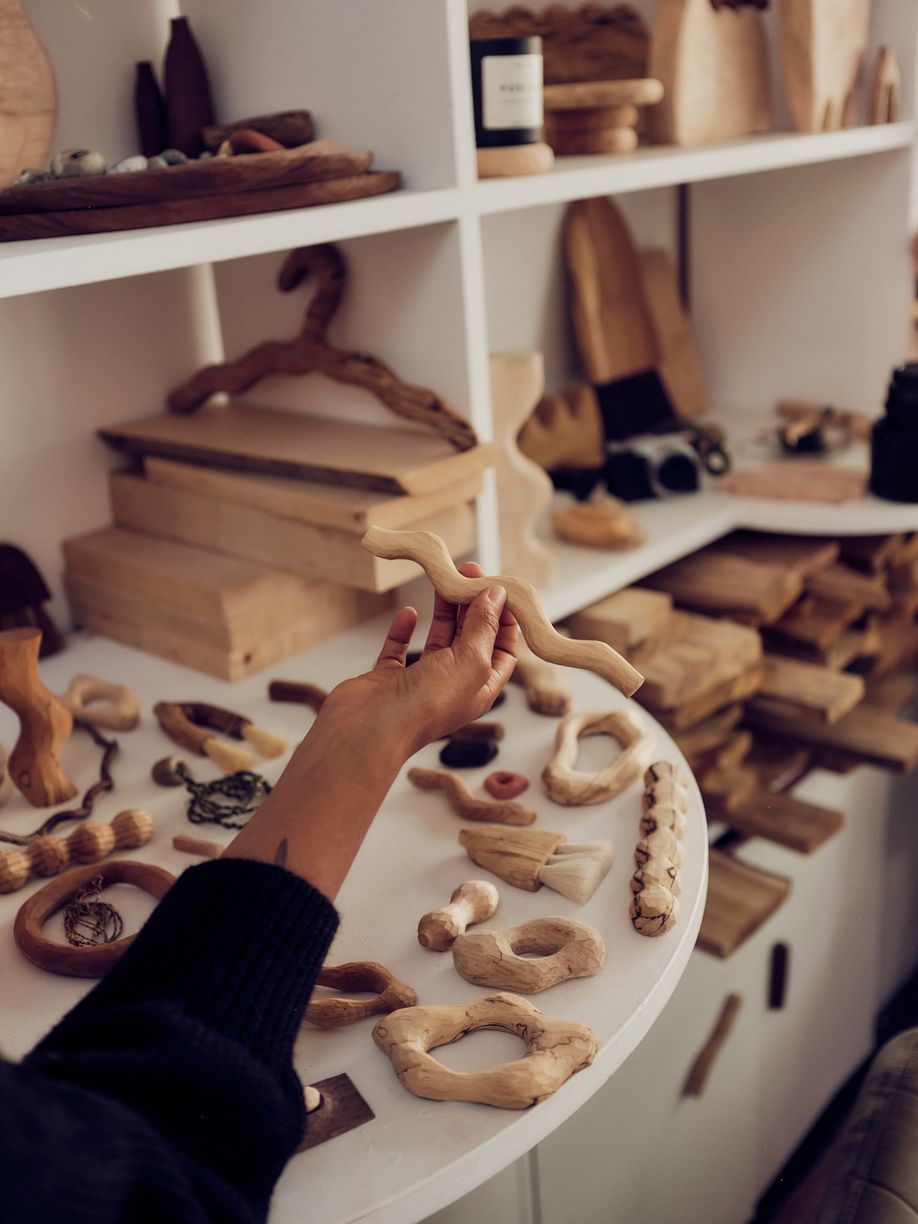
Photo: Liz Seabrook
Sellu took up whittling 14 years ago as a hobby, while working as a fashion trend forecaster. When she was made redundant by UK brand Jack Wills in 2014, the first thing she wanted to ditch was the 9-5 screen time. “It was all very digital, very online. I’d make documents,” she says. “But [making] something I could hold, a tangible, physical, tactile, useful item, [felt] good. It was like, how can I do more of this?”
Asked if hand-made objects will still resonate with shoppers decades from now, as AI continues its takeover (and assuming it doesn’t wipe us out), Sellu is positive. She points to the growing use of texture by fashion and homeware brands — boucleé sofas, raw-edge ceramics, corduroy upholstery, linen clothing, unpolished wood grain — as evidence of a desire for more tactile experiences. "That need for texture in your life, whether it's clothing of homeware, is about bringing life back into a world that's becoming flat.”