At Thingtesting, everything we recommend is independently reviewed. We may earn a commission on purchases made through our links.
Why Wearables are Getting Super Specific
Fitness watches and rings are now mainstream. Now, a new wave of wearable tech companies are betting there’s a big business in tracking what the all-rounders can’t.
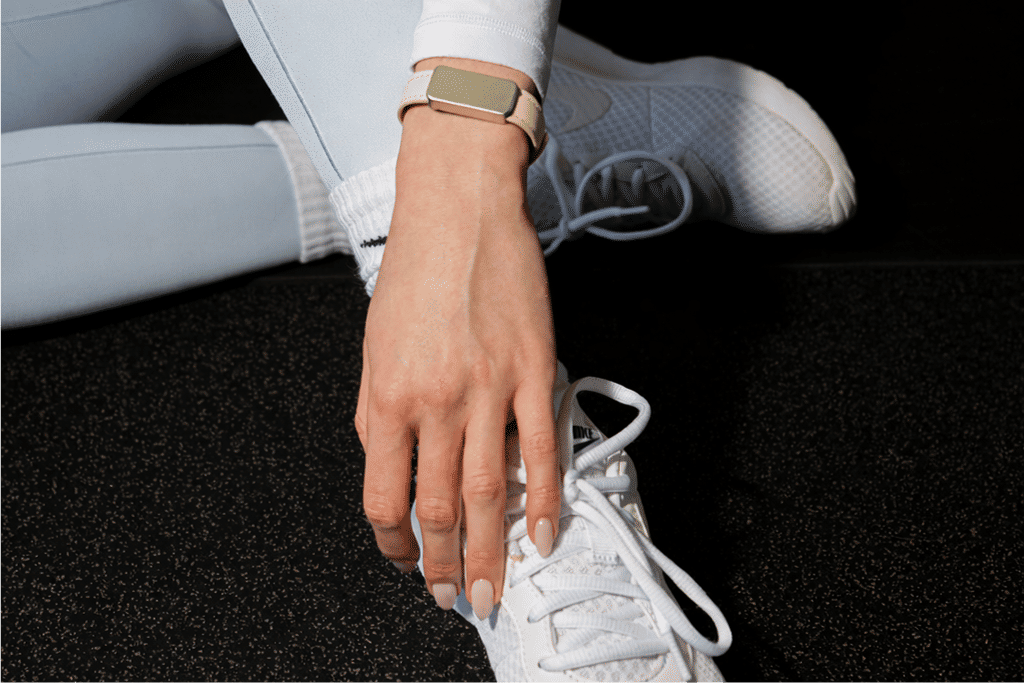
Image: Fort
Am I getting any stronger? Am I angry, hangry or hormonal? Am I about to get sunburnt? Today, new wearable devices are launching to answer all those questions and more, as founders chase the gaps in data and functionality left by the likes of Fitbit and Apple.
In recent months, Clair has opened pre-orders for its wrist-worn continuous hormone tracker, Anoria has announced the upcoming launch of a mysterious-sounding “wearable for the EQ [emotional intelligence] era”, and Fort is busy readying a sleek, screen-free bracelet for people who prefer resistance training to running. The90’s Gem is a necklace with a pendant that tracks real-time UVA and UVB exposure, with an app that counts down your “Time to Burn.” TAYA, also due to launch later this year, is a necklace you can talk to, and it’ll capture your thoughts for later.
Each brand has spotted an opportunity to track what’s never been tracked before, and to build better-looking, better-quality hardware devices at a time where AI is eating opportunities in other tech fields like software. But how likely is it that people will spend hundreds of dollars on a wearable that’s great at doing one thing, especially if they already have a watch that tracks everything else?
“People tend to associate these devices with a sense of identity or a purpose,” says Jenny Duan, the founder of Clair. In the same way a Coros user is signalling their interest in outdoor pursuits via their fitness device, new wearable brands are hoping they can tap into other communities whose interests aren’t covered by what’s already on the market. “Differentiation in terms of use case or audience is what’s going to matter long term.”
Wearables Everywhere
Once upon a time, even wearing a fitness watch was not normal.
If mass step counting were a measure of societal progress, you only have to look back 15 years to see how far humanity has come. Back then, Jawbone (now RIP) had only just broken into the activity-tracking market, with a gadget described in wary terms as “a wristband… that monitors your every move then tells you what to do”. Fitbits didn’t yet come in watch form; its then-flagship product, a clip-on pedometer the size of a lipstick, feels quaintly retro today. You’d have another four years to wait if you wanted an Apple Watch. A 2014 report on wearable technology concluded that the future for these devices looked niche and bleak.
Yet as improbably as it might have sounded in the 2010s, fitness trackers now have their hooks in us. Gallup estimates that one in five Americans wears a fitness tracker. It’s now common to see people sporting watches that not only tell the time and measure steps, but calculate VO2 max, sleep quality and more, 24/7. People are even buying stacking rings and specially designed covers to make Oura rings look prettier, and leather watch straps to replace the standard-issue rubber ones.
As the opportunity has grown, wearable tech companies are reaching milestone valuations with smaller customer bases, says Miranda Nover, the co-founder of Fort and an ex-Tesla engineer. In September 2025, Oura said that it had sold more than 5.5 million rings to date. A month later, it announced a $900m raise at an $11bn valuation — far exceeding the $2.1bn Google paid for Fitbit in 2019 and its 29 million monthly users. This year, Whoop raised $575m at a valuation of $10bn, with about 2.5 million users.
“The value people are able to derive from software-only products is diminishing with the advent of AI, and with how easy it is to build software,” says Nover. “But the hardware is still going to matter. People still need to pick a device with the form factor, the quality level, the price point and the aesthetics that works for their lifestyle.”
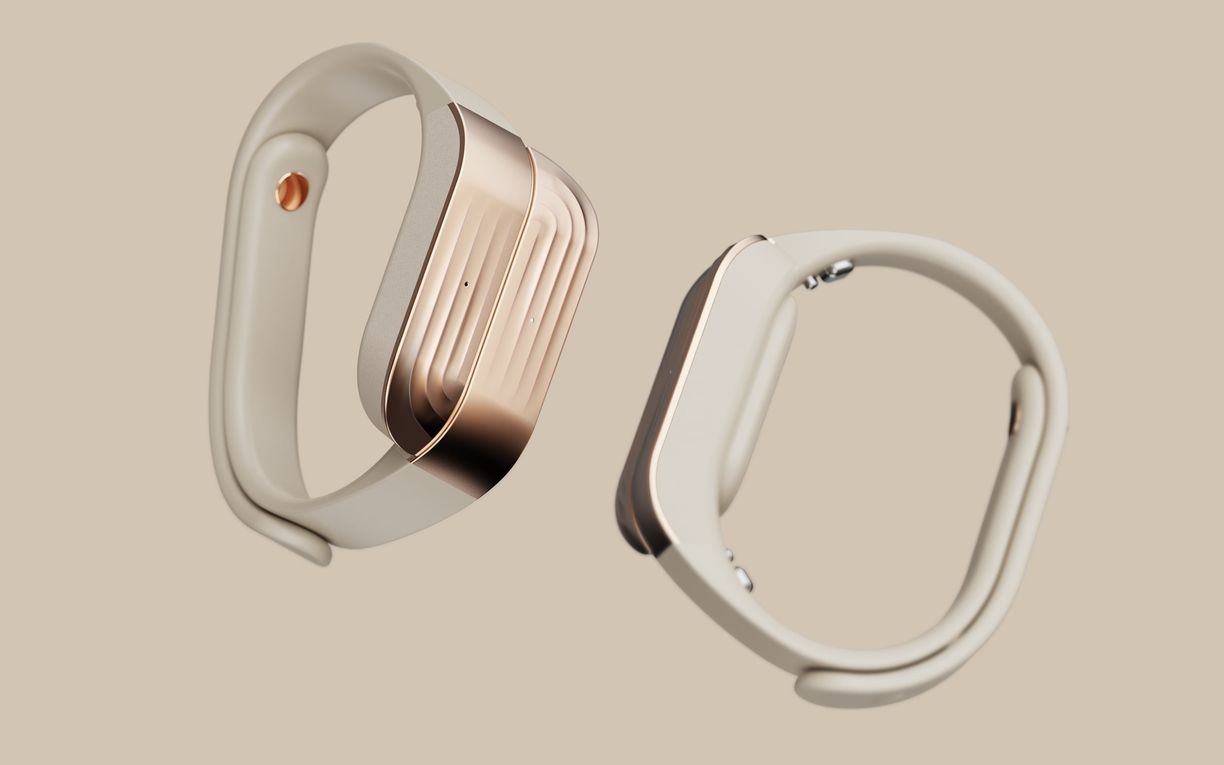
Clair Health's continuous hormone tracker. (Image: Clair Health)
New Frontiers in Fitness Tracking
Fort’s pitch is that weight lifting and resistance training are still activities that most fitness trackers handle badly, requiring users to manually input data and providing stats like heart rate or calories burned, which don’t really help people understand if their muscles are growing.
“I couldn’t wear it in the gym at all, because I was going to scratch or dent it, and it wasn’t telling me anything useful at the end of my workout,” she says. Looking at what else was on the market, “I had to sacrifice either aesthetics, hardware quality or data output, and I wanted something that could do it all.”
Fort is a screen-free bracelet, made with stainless steel and ceramic. It’s smaller than your average fitness watch. Using motion sensors and machine learning, trained on data collected from Fort's community of beta testers, it shows how hard users have worked relative to their last sessions, and flags point at which form starts to slip. To access this data, users will have to pay an $8-a-month subscription fee, although the device can be used simply as a step and sleep tracker for no ongoing cost. It is currently pre-selling for $309 ahead of a planned $349 retail price, with roughly 600 devices reserved so far.
Clair is pursuing a different data gap. Duan says the bracelet is the first wearable built for female hormonal health. Rather than predicting ovulation using temperature rises as other cycle trackers do, Clair uses new, smaller sensors that constantly track, along with machine learning, to show users their hormonal curves. “Wearables have failed on women when it comes to giving accurate data around sleep, cycle prediction and almost all activity,” says Duan, “because wearable data primarily comes from men.” Clair currently has 30,000 people on its wait list, and the long-term ambition is to get the device cleared for medical use as a continuous hormone tracker.
So will people start wearing additional devices for every metric they want to track, or still prefer one that does it all — or close enough?
The specialist wearable tech makers say they don’t need everyone to shop with them in order succeed. If anything, they feel there is room for even more devices to hit the market, as they identify underserved communities where they can build the kinds of devoted followings Oura and Whoop have.
“I’m not trying to get every single person to buy my product,” Nover says, adding that recent fundraising announcements from other wearable companies show that’s not what needs chasing, anyway. “I'm OK if this is a small, devoted following like Whoop or Oura have.”