At Thingtesting, everything we recommend is independently reviewed. We may earn a commission on purchases made through our links.
Thingdrop: Behind the Brand
AWA: This Week's Thingdrop
Cival Van Der Lubbe started out making sparkling water at home. Then he looked inside the bottle.
Learn more about Thingdrop here
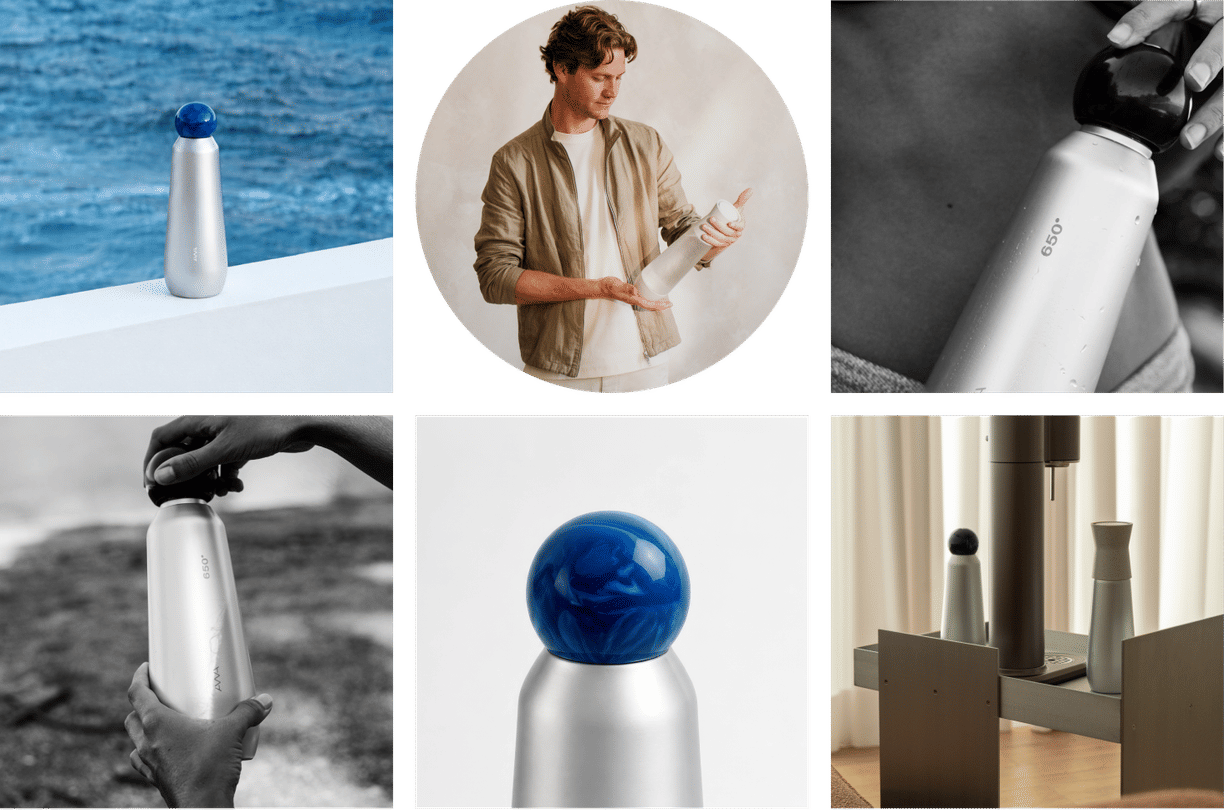
Meet the Founder
Cival Van Der Lubbe grew up on Curaçao, spending much of his childhood in and around the water. Island life gave him a love of the ocean, and a front-row view of the damage being done to it.
It also made a quieter problem obvious. On an island, almost everything is imported, and you feel it in prices and delays. "If you look at any given beverage, it's like 98% water," he says. "We're just adding the flavor at the end. Why are we shipping this around the world?"
Cival had spent his career designing consumer products, and beverages struck him as one of the most wasteful industries we touch every day. He wanted in, without adding to the pile. He called the brand AWA, the Papiamentu word for water. Today it's based between New York and Portugal.
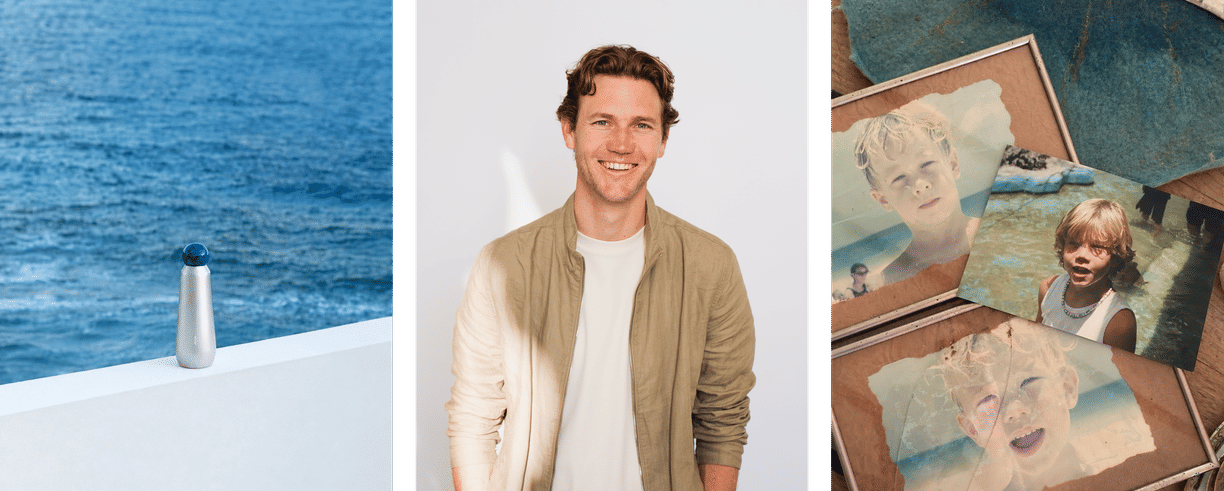
From Soda Maker to Water Bottle
AWA started as a home carbonation brand. Its first product, the AWA Carbonator, let people make sparkling water at home. In the US that's a niche habit. In Germany or Sweden, Cival says, it's closer to 35 to 40% of households.
So the team spent a lot of time explaining the category, and customers kept handing them problems to fix. They didn't want to swap CO2 tanks at a store, so AWA set up tank exchanges by mail. They didn't want a bulky machine on the counter, so it went cordless and small. They didn't want an ugly bottle on the table, so AWA designed a carafe with a click lid, with patented features, that preserves bubbles between pours.
Then people asked for something that wasn't plastic, kept drinks cold and could leave the house. That became AWA Steel, and people started buying it without owning a carbonator at all. They fill it with coffee, iced tea and plain water. Some wear it on a sling and switch colors to match their outfits. "People are using this, they want to show it off," Cival says. Most bottles on the market, he says, are "a little bit tacky." AWA Steel made daily hydration feel more like a ritual.
What’s Inside Your Bottle
The part Cival most wants people to know about is the one you can't see. "The most important thing," he says, "is actually on the inside."
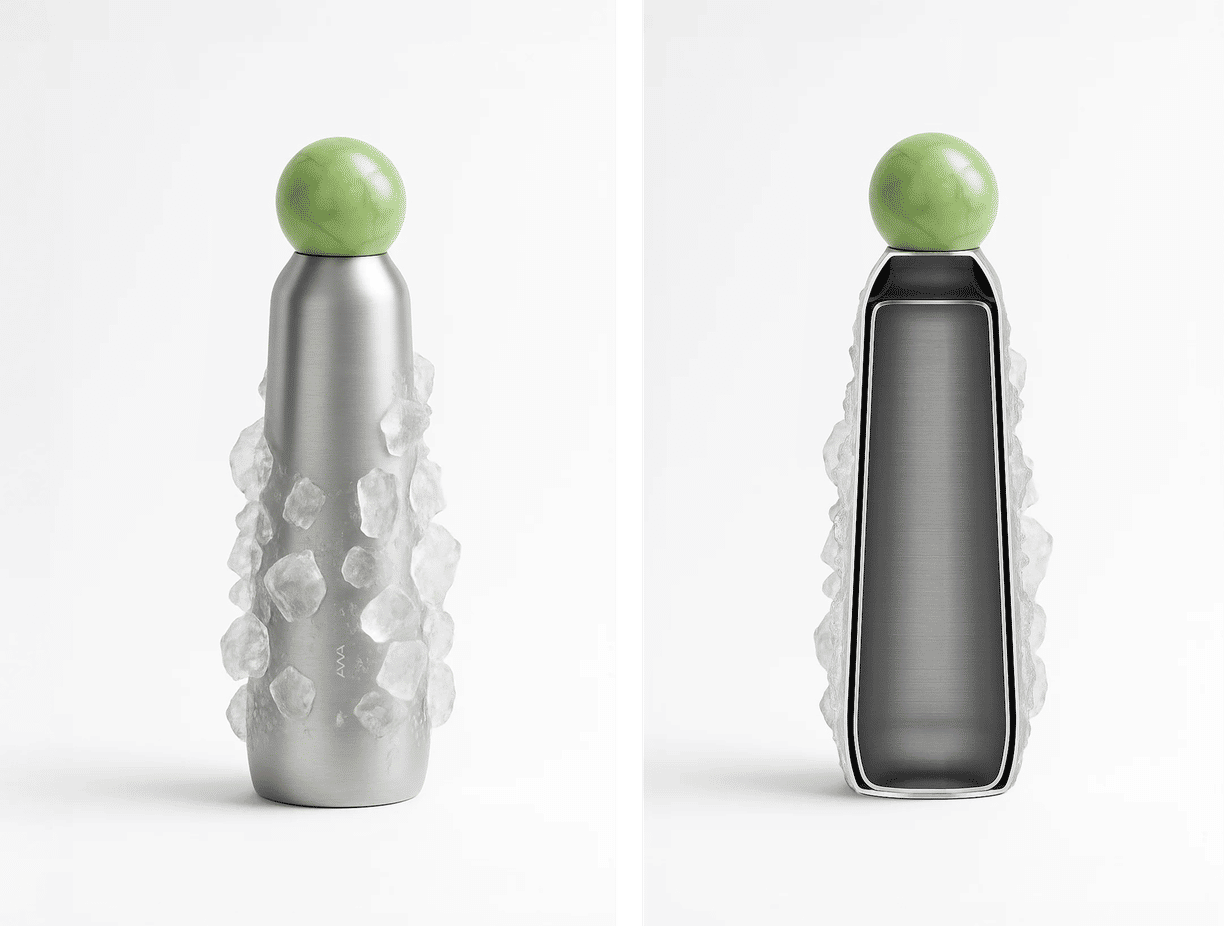
A stainless steel bottle usually advertises its grade on the outside. The inside, he found, can tell a different story: a plastic liner, a sprayed-on coating, or a different grade of steel altogether. Some insulated bottles have also drawn scrutiny for using lead-containing solder to seal them. "What happens if we just say no to all of these things?" he asked.
The answer was AWA Steel. It's made from 316L marine-grade stainless steel, a step up from the more common 304, inside and out. Instead of a coating, the interior is electropolished, a process also used on medical and surgical equipment. An electric current smooths the steel at a microscopic level, leaving less for odors and old flavors to cling to. No plastic liner, no spray coating.
Cival took the idea from water beading off a duck's feathers, or a lotus flower. "You can't look inside your own bottle," he says. "So you wouldn't know."
The bottle still carries AWA's sparkling-water roots. Its lid is built to hold carbonation without leaking, and it fits the AWA Carafe too, so older pieces don't go obsolete.
Building It the Hard Way
Saying no had a cost. "It's very difficult to build," Cival says. "And very expensive. And we learned all of that the hard way." 316L behaves differently from common grades of steel, so AWA needed new tooling and new processes. When more than 1,000 bottles failed to meet AWA’s high quality standards, the team scrapped and recycled them. Then it happened again, and deliveries slipped by months.
"The hardest part wasn't the money or starting over. It was knowing our customers were waiting," Cival says. "We'd rather start over twice than release a product we're not proud of."
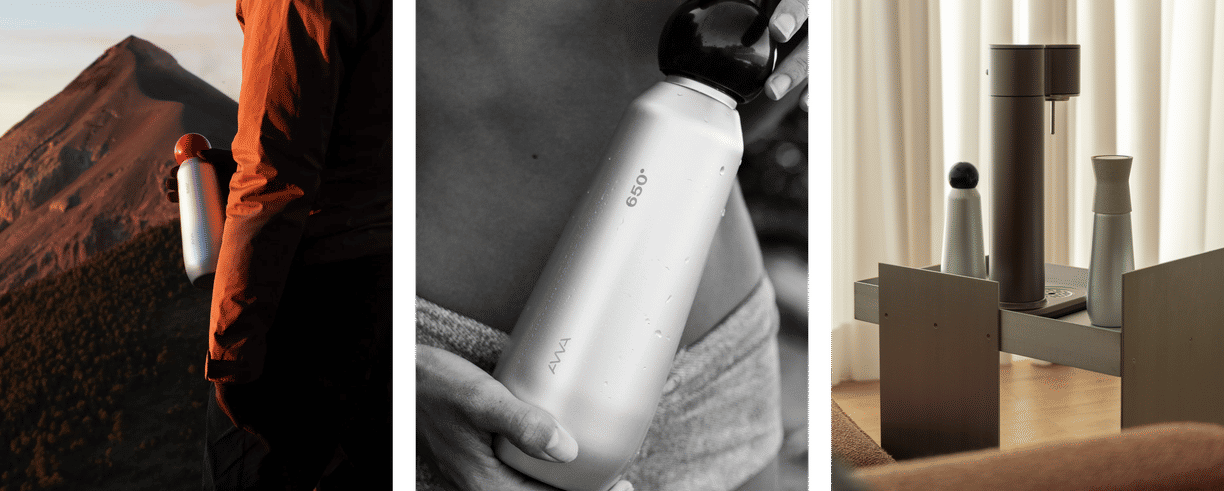
The finished bottle got a field test earlier this year, when Cival's wife talked him into climbing an active volcano in Guatemala. "That doesn't sound like a great idea at all," he remembers thinking. They hiked up in scorching sun and slept below freezing within sight of the eruption. One bottle held hot coffee, the other cold sparkling water. Both lasted the whole trip, which meant hot coffee the next morning.
Back to the Bay
Blue is the color AWA customers have asked for most, and it's the brand's newest drop. Like the rest of the collection, it pays homage to Curaçao. In Papiamentu, boka means mouth, and also bay.
Boka Blue is named for Boka Sami, a small fishing village with a rich diving history. Cival grew up there learning from the Wederfoort family, who pioneered diving on the island and once hosted members of the Cousteau family. "Much of what I know about diving and living with the sea, I owe to this remarkable family," he says.
The bottle has a deep blue body, and its lid carries soft white strokes inspired by the whitecaps on the bay. Each lid's pattern is its own. It's one of five AWA Steel colors, made in small batches that tend to sell out. "We're just kind of designers trying to get this thing off the ground," Cival says.
AWA is this week's Thingdrop
Want to try AWA Steel for yourself, in Boka Blue or any of its other colors? Shop through Thingtesting between Thursday and Sunday, write a review, and get 40% back as a cash-based commission for your thoughtful review. Open to Level 1+ Thingtesters, limited quantity. Learn more about Thingdrop here.