At Thingtesting, everything we recommend is independently reviewed. We may earn a commission on purchases made through our links.
What’s the Difference Between All These Sunscreen Brands?
There are now more than 70 brands selling sunscreen in the Thingtesting directory. We asked them to explain themselves
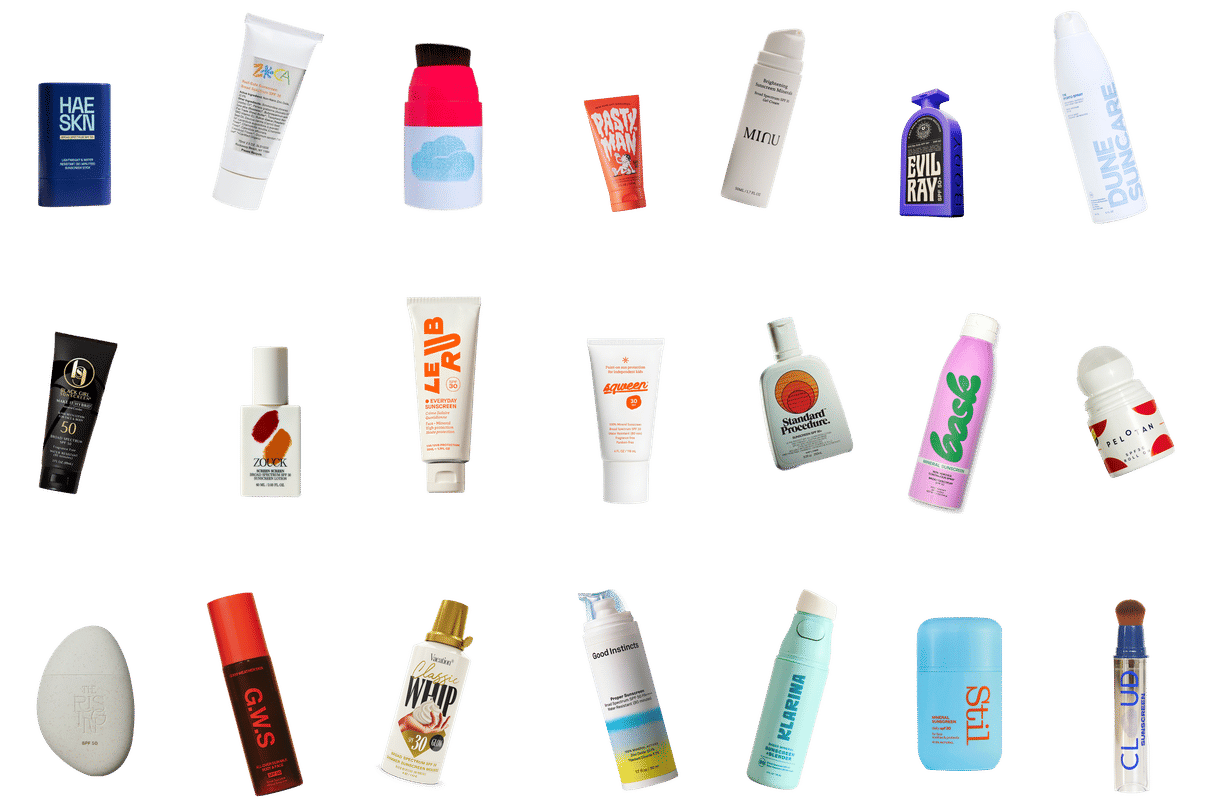
Lots of sunscreen brands.
Way back in 2021, we noticed an awful lot of sunscreen brands on the Thingtesting directory: 11. We were so amazed by the sheer number of them that we demanded they explain their differences to us.
But it seems we jumped the gun. Five years on, a more recent count puts the number of sunscreen brands in our directory alone at 70+, from which we can extrapolate that there are approximately a bajillion sunscreen products on the market today. And the launches keep on coming: in the 28 Brands Spotted round-ups we have published so far this year, six have featured at least one new sunscreen launch.
Industry figures back up what's plain to see. Analysts reckon the global suncare market will grow from around $17 billion this year to more than $28 billion by the early 2030s. In the US, the FDA has just approved bemotrizinol, the first new UV filter in decades (a development brands are no doubt already all over).
The newer brands we are spotting aren’t your Neutrogenas or your La Roche-Posays — they do things differently. The problem for consumers is that they all do things differently in similar ways. They all promise broad-spectrum protection, none dare admit to leaving a white cast, they all have strong opinions about ingredients, and they all agree you should be applying your sunscreen more regularly. So how exactly are shoppers supposed to choose?
We decided to ask them, again.
Of the 15 sunscreen brands we contacted, nine agreed to joust it out over an email Q&A where they would have no idea what their competitors might say. We awaited fierce disagreements and radically different philosophies. And while we certainly wouldn't be cynical enough to suggest these brands are all selling very similar things… we did get a lot more consensus than expected.
Selling sunscreen as a habit
All founders agree the science is settled on whether people should use sunscreen. The real challenge is persuading people to actually do it, and then keep reapplying it. This conveniently creates a business opportunity alongside the humanitarian one. The more we apply, the more we buy.
Tobias Carlson, co-founder, PASTY MAN: “Today's formulas are better than ever, so the biggest opportunity isn't necessarily making a better sunscreen, it's giving people a better reason to wear one.”
Samantha Lawi, founder, Sqween: “Most sunscreen companies focus primarily on the formula. We focused on the behavior, too.”
Sherril HwangBo, co-founder, HAESKN: “Everyone remembers to pack sunscreen for the beach, but almost nobody remembers to reapply it on a Tuesday.”
Michael Huffstetler, co-founder, Bask: “We surveyed 50,000 people and personally interviewed 500 trying to find out what they hated about sunscreen. They told us, overwhelmingly: texture. So texture and feel are where we maniacally focus.”
What actually makes these brands different?
The brands had a harder time answering this question than expected. Most founders insisted they weren’t just another sunscreen brand, before unknowingly providing eerily similar USPs to their peers.
Again, this is largely because the differences between the brands lies less in their individual formulation than in their target audience, and how the branding and form factor reflects that.
PASTY MAN has built its entire brand around getting more men to wear sunscreen, pointing out that men are nearly twice as likely to die from skin cancer because they're less likely to use SPF. Sqween has gone in an entirely different direction, creating colourful mineral sunscreens with built-in brush and sponge applicators so children can “paint” sunscreen onto themselves rather than fight with parents over it. HAESKN has focused on reapplication, designing an SPF stick that's easy to pop in a handbag.
Megan Black, founder, SONNI: “For decades, sunscreen has had an experience problem. It sucks to wear. So we fixed it. Mineral [sunscreen] has always been known for a chalky cast and heavy feel. We engineered that out.”
Franchesca Hashim, co-founder, Good Weather Skin: “We do one thing: mineral SPF, done exceptionally well. People hear ‘mineral’ and think chalky, thick, or a white cast, and that stigma is real because a lot of mineral formulas earned it. That’s the challenge we set out to solve.”
Huffstetler, Bask: “I lost a family member to skin cancer, and we’re on a mission to end skin cancer. I also think it’s important for companies and brands to have a reason to exist outside of just making money. Last year we gave away over 150,000 units of sunscreen.”
Hot rays, hot goss
Naturally, in a category that’s heating up, brands can rub each other up the wrong way from time to time. As purveyors of reviews, interviews and articles, and therefore gossip, we are happy to share their comments with you. See if you can guess who they’re talking about.
Emily Seager, founder, Zoca Lotion: “Sunscreen companies face significant pressure to address both environmental impact and user safety, and often fudge this information. The amount of greenwashing in the sunscreen space is extremely high. It's hard to not want to get on a sunscreen soapbox, but it's too exhausting to imagine trying to call out all of these companies, [so we] stick to our own goals.”
Emily Doyle, co-founder, Dune Suncare: “We’re not here for trendy products that aren’t actually efficacious in their SPF claims… or seeking flash in the pan virality on social media. We don’t feel some of the other (and even larger) brands have the same mission in mind.”
Huffstetler, Bask: “You’ve got brands that ‘only’ make mineral and villainize chemical sunscreens to sell their own, when both are effective and recommended by dermatologists. And you’ve got brands with ‘tanning’ right in the name selling a tan as something virtuous, when UV exposure is the single biggest driver of damage to people’s skin.”
Why is everyone launching a sunscreen brand?
The brands reached another consensus here. All founders pointed to growing awareness of skin cancer, increased concern about premature aging, and growing consumer awareness, particularly over the last decade, when it comes to ingredients. This has created an opportunity for new brands to cater to shoppers that are more interested in mineral than chemical formulas, for instance, or who want something that looks at home on their bathroom shelves, next to their design-forward skincare products. Indeed, several founders argue that sunscreen is still in the process of transitioning from the travel aisles to the skincare ones — to become something you use every morning, on both body and face.
Doyle, Dune Suncare: “You can buy a $200 serum and it’s 100% less effective at keeping you looking young than a $15 sunscreen from your local drugstore. Simply put: daily SPF is the most powerful step in skincare.”
Hashim, Good Weather Skin: “At this point most categories are crowded and the reason why you started is the reason why there's still space. The category stopped meeting people where they actually are, and there just hasn’t been enough innovation in form factor for something people are now expected to use 365 days a year. That gap is what’s pulling new brands, including us, into the space.”
Huffstetler, Bask: “This is a hard category. It’s full of stodgy incumbents with objectively bad products, all protected by industrial moats. The brands that break through those barriers have seen very strong financial outcomes. A few have been acquired at eye-popping revenue multiples.”
Seager, Zoca Lotion: "Sun protection is much cooler now. People don't want to age thheir skin or risk skin cancer. People want to protect themselves, which leads to increaesed demand."
The one piece of advice they would all give shoppers
When we asked the brands how shoppers should choose their sunscreen, their responses were so uniform that we started to wonder if they had been discussing their answers after all. (TL;DR: Buy sunscreen, actually use it.)
Mac Wright, founder, Evil Ray: “The best sunscreen is the one you use every day.”
Lawi, Sqween: “The best sunscreen is one you'll actually use consistently.”
HwangBo, HAESKN: “The best sunscreen isn't necessarily the fanciest one, it's the one you actually reapply.”
Black, SONNI: “The best sunscreen is the one you'll actually wear every single day.”
Doyle, Dune: “The best sunscreen is the one you’ll actually want to wear every single day. Start there.”
Huffstetler, Bask: “Find one you’ll actually use every day. That matters more than any single spec on the label.”
Hashim, Good Weather Skin: “Don’t underestimate the daily use test. You’ll know you’ve found the one when you actually reach for it every single morning.”
Seager, Zoca Lotion: “Choose the sunscreen that they want to wear.”
So, after nine founder interviews, dozens of pages of answers, and countless mentions of zinc oxide, modern UV filters and ingredient transparency, that’s the verdict.
To be fair, it's advice you can't disagree with. Or, as Evil Ray’s Wright puts it: “We're in the game to stop cancer first, wrinkles second. Can't have wrinkle-free skin without a heartbeat.” Hear, hear.