At Thingtesting, everything we recommend is independently reviewed. We may earn a commission on purchases made through our links.
Put a (Round) Lid On It
Spherical bottle caps aren’t the cheapest, or most user-friendly packaging decision. Why are more brands opting for them, and what are they trying to say with them?
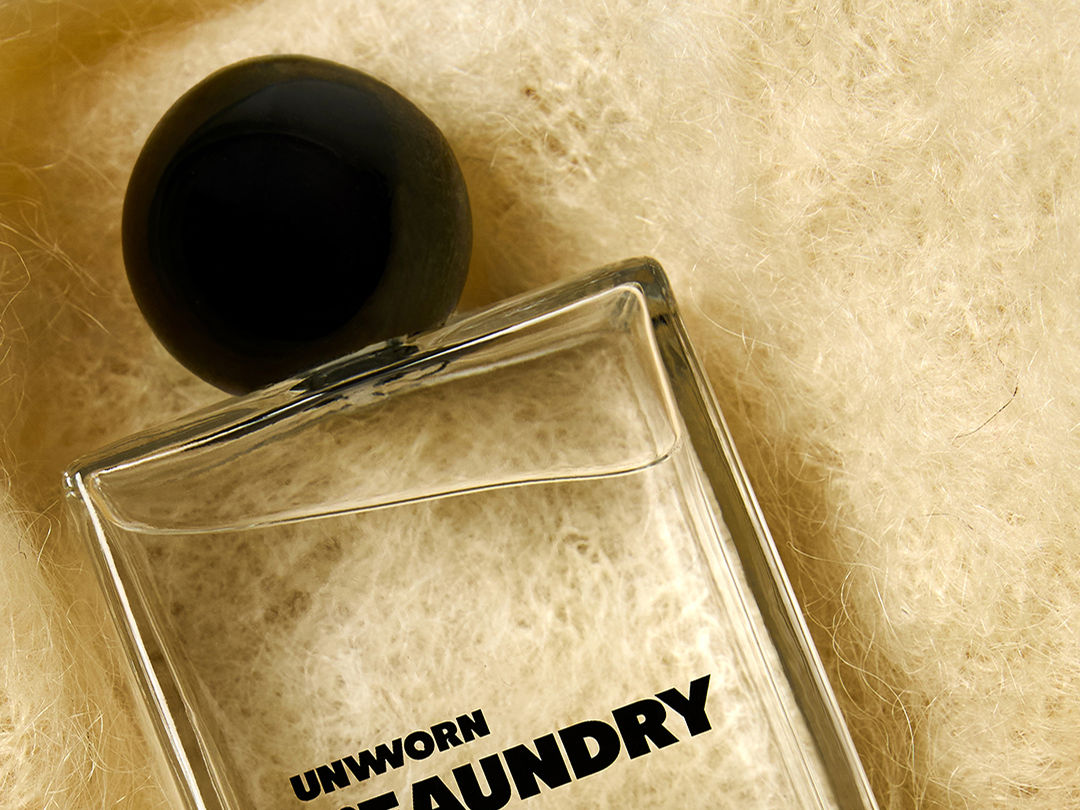
Image: Unwworn
A new packaging trend has emerged among fancy brands selling fragrances and scent-adjacent products: bulbous bottle caps.
These caps are often more expensive and impractical to work with than a standard bottle lid. But as more and more brands fight over our fragile attention spans, an increasing number have decided this design-forward flourish is worth it.
Former WeightWatchers CEO Sima Sistani is using squished sphere lids for her just-launched perfume brand Liberation of Flowers, where they sit atop sculptural bottles designed by the artist Ashley Longshore. Last Parfum opted for round, wooden caps for its newly rebranded line of scents revealed earlier this month. Since 2025, niche perfume brand Oddity Fragrance has been selling bottles of perfume with hand-cast epoxy resin caps made from different raw and found materials, including charcoal and beach detritus, in sphere-like shapes. K-beauty brand Mixik Skin uses caps that look like brightly coloured marbles, while Perfume Head has gone with a classic, black spherical cap.
History of the Perfume Bottle
Globe-like shapes — including bottle lids — have been associated with fragrance for millennia. In ancient Greece, spherical vases known as aryballoi were used to store scented oils and perfumes. In the 1900s, atomizers started to appear on fragrance bottles so that scents could, for the first time, be sprayed onto the wearer using a soft, globular pump. In the 1920s Art Deco era, fragrance bottles became geometric objects in their own right, with sphere and dome forms a common motif among glassmakers like René Lalique, who designed perfume bottles for François Coty. In 2000, luxury perfumer Serge Lutens chose orb-shaped caps for his eponymous perfume brand. The form was out of step with modern preferences for applying perfume — so for customers who didn’t want to carefully dab drops of liquid from the bottle’s narrow neck, as tradition dictated, he provided separate, screw-on atomizers.
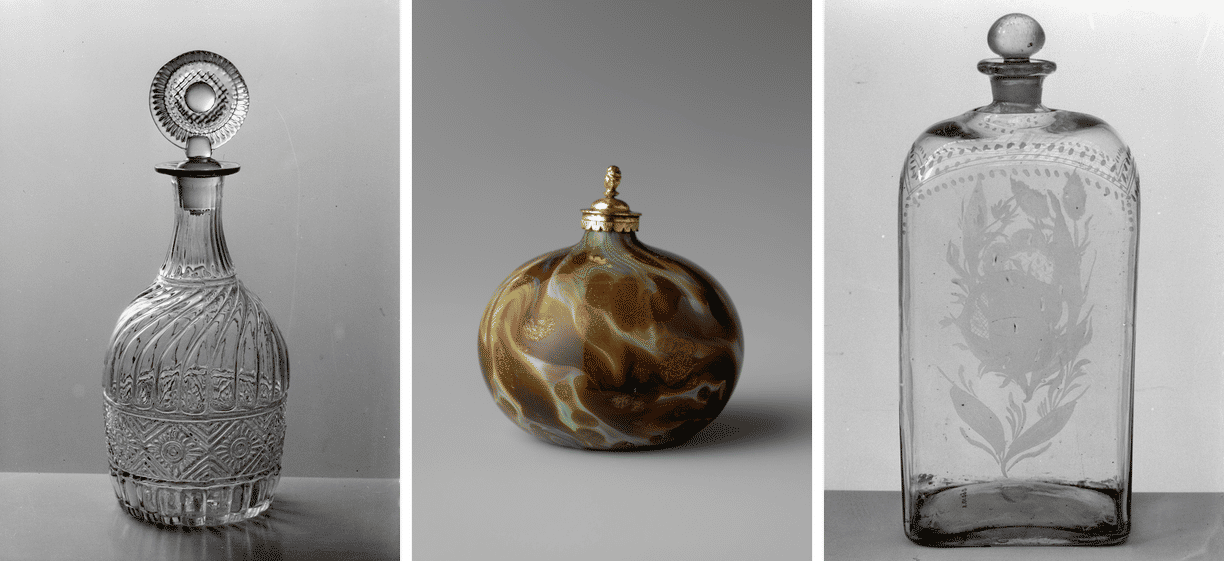
18th century perfume bottles and decanters. (Credits, from L-R: Rogers Fund, 1936; Edward C. Moore Collection, Bequest of Edward C. Moore, 1891; Rogers Fund, 1909)
Beauty Can Be a Pain
While most packaging is designed to be user-friendly, brands reviving the trend for round bottle caps think a bit of friction is worth it if it means their products come across as that bit more elevated.
“Most fabric sprays look like cleaning products. Functional, plastic packaging that looks like it belongs shoved in a cupboard,” says Meghan McKenna, founder of laundry-fragrance brand Unwworn, which launched in 2025 and uses round, black lids. “I wanted L’eaundry [the brand’s fine fragrance for fabrics] to communicate that it’s as much fragrance as function. Something that belongs with your beauty products, out on your shelf.”
She points to Diptyque’s L’Eau Papier, which costs $195 for a 100ml bottle, as a reference point. “That’s exactly the category signal I wanted to borrow from,” she says. “And I think we’re seeing more brands borrow codes from fragrance and beauty as traditionally functional categories become more design-led.”
While a spherical bottle cap signals luxury, it is also more expensive for brands, both in terms of the part itself but also because it impacts things like shipping costs. “A spherical cap takes up more space than a standard cap,” explains McKenna. “Which matters when you’re working out cartons, shipping and storage. As a small brand, every packaging decision has a knock-on effect on cost and logistics, but for us, the visual impact was worth it.”
Maternity bodycare brand Mayah has experienced spherical snags, too. The co-founders say they opted for rounded caps on Mayah’s Body Oil to differentiate from the “hard-edged and clinical” packaging commonly seen on the bodycare aisles, in favour of a softer shape. But the bottles also ship with a pump to dispense the oil in portioned doses, which the decorative cap can’t do. “It isn't the neatest solution,” says co-founder Rebecca Heywood. “Nobody has really done this in this category, so there's no off-the-shelf answer for any of it.” The brand is currently working on a 2.0 version of the packaging that should solve the problem.
But practicality is only one aspect of packaging. “The biggest pro is perception,” says McKenna. “It’s a very small packaging decision that can change how you read the entire product.”