At Thingtesting, everything we recommend is independently reviewed. We may earn a commission on purchases made through our links.
FOUNDER INTERVIEW
With Sapone, An 18-Year-Old From Lithuania Hopes to Crack America’s Shampoo Market
Shampoo-in-a-soap-bottle brand Sapone’s launched today. Founder Paulius Buivydas tells Thingtesting what it’s like to start an eco-friendly company and pitch it on Shark Tank before finishing high school
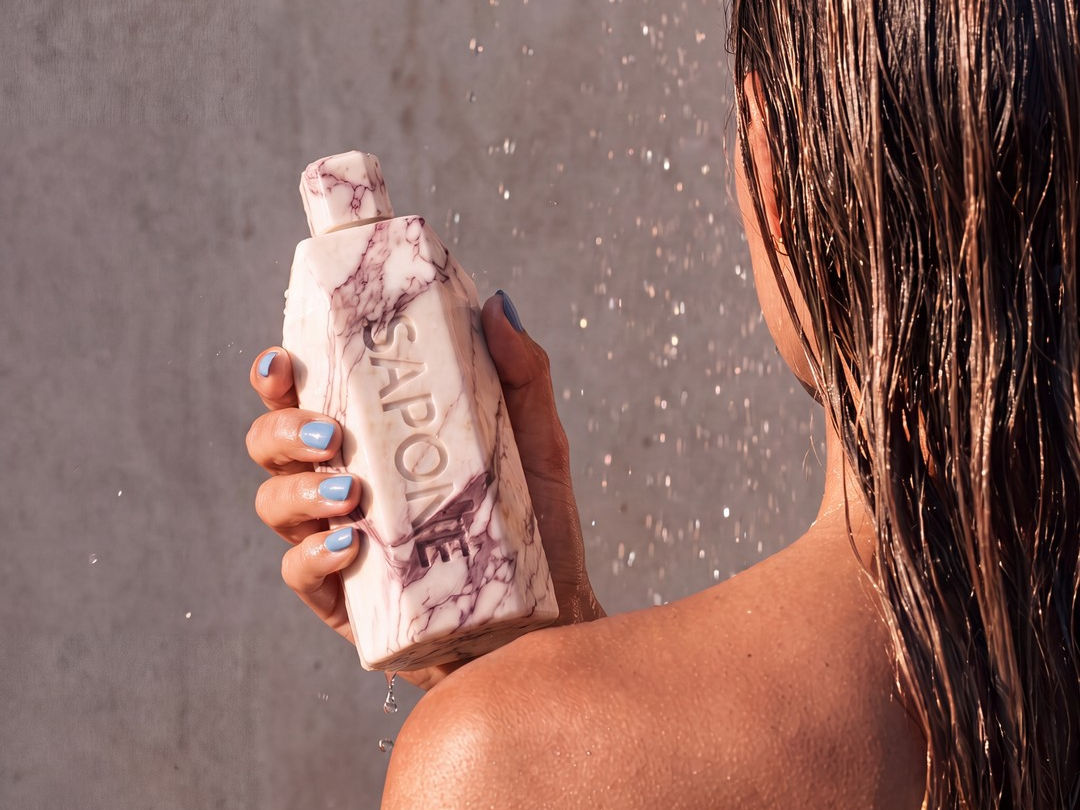
Image: Sapone
Most shampoo comes in a plastic bottle you squeeze until it’s empty. Sapone has another idea: its shampoo is housed in a hollowed-out bar of solid soap, meaning the shampoo’s bottle doubles as a body wash.
The soap is designed to dissolve at roughly the same rate as the shampoo is used, leaving no plastic or spills behind (although a soap dish is available to help the bottle dry out between uses). The brand officially launched today, after amassing a waitlist of over 11,000 people in two months, according to the company.
The finished product is the result of an intensive development and testing cycle. Founder Paulius Buivydas, who was just 17 when he started working on the brand last year, says he approached 12 engineers before he found a team willing to take on the challenge of housing shampoo (which is typically 80% water) inside soap (which dissolves in water). The solution, which Sapone is now in the process of patenting, has been to create an “inner layer” that prevents the bottle from dissolving from the inside.
The product has been through a total of 23 prototypes and has been tested by 1,000 users, who gave feedback on how quickly the bottle was melting and how slippery it got in the shower. And while Sapone spent months developing its soap bottles, the shampoo inside is formulated by Uoga Uoga, a natural cosmetics brand from Lithuania. It's a decision Buivydas, who is bald, hopes will lend his brand some extra credibility. “In [social media] comments, people always say ‘he’s bald, what does he know about shampoo?’” says Buivydas. “So we got a shampoo people can trust, and now people can test the bottle itself.”
Learning the Basics
Sapone started as a school project when Buivydas participated in the Junior Achievement program at his school in Lithuania, where teenagers are given a stripped-down company structure and left to build whatever business they like. “Our teacher told us to make something unique, something cool, something to sell,” he says. “You create the product, talk to investors, and get feedback.”
The idea for Sapone came from an unlikely source of inspiration. If Kinder Surprise could house hard plastic toys inside soft chocolate shells, Buivydas wondered if there could be a way for shampoo and soap to do the same, reducing people’s plastic consumption in the process. According to Statista, in the year to October 2025, more than 650 million bottles of shampoo were purchased in the US. Most will end up in landfill.
He also “wanted to make eco-friendly cool” and create something that looked nice and felt elevated, compared to the crunchy brands that he and his peers didn’t connect with. “It’s not only for the Earth. I actually want [people] to buy this thing.”
Most of the students wind their businesses down when the school year ends, but Buivydas decided to see if Sapone could stand on its own two feet. Encouraged by his mother, a chemist, and father, a business owner, he invested $300 of his own money in his first prototypes.
But starting a business so young is not easy. Junior Achievement’s “junior LLC” structure allowed Buivydas to take payments early on, and when it became clear the product was gaining traction, he asked his partner’s father, another business owner, to incorporate a company while Buivydas ran it. Now that he’s 18, the business is in his name. “There’s so many restrictions when you start a business at 17 or younger, but I didn’t see it [like that]. I saw them as part of the journey.”
Go Big, or Stay Home
In September 2025, when the company was four months old, Buivydas applied for a spot on Shark Tank’s Lithuanian franchise, where he impressed the judges with his canny marketing strategies. He told them how he’d left samples in hotels while on vacation with his family, so other guests might find them. He left with a €50,000 investment and “the validation that people actually want this product.”
Part of what Sapone is selling is the idea that eco-friendly doesn’t require a trade-off. “When you have an eco-friendly brand, people assume you should be giving something up," Buivydas says. Sapone’s bottle design leans high end, with a sturdy, sculptural form and marble finish, inspired by classical architecture. Sapone is the Italian word for soap. “It's going to sound ridiculous, but we got inspiration from ancient buildings — not only from CPG businesses, but from everywhere else.”
The bet is that this positioning could help Sapone achieve big things. Despite being based in Lithuania, Sapone is shipping to the US first, where the market is bigger and appetite for eco-friendly products is much stronger. The company is also currently raising a venture round, and no doubt hopes to secure US names on its cap table. If it closes the way he expects, Buivydas says the plan is not to open a US outpost but to relocate his company entirely. “I can see a vision where we raise and then our team is moving fully to the US,” he says. It’s a big ambition from a founder who has only just launched his first product. Then again, so was getting a soap company onto national television at 17. “I’m nervous, but so excited,” he says.
Plus: Reimagining the Personal Care Aisle
Sapone's soap bottles are reminiscent of Roman columns, but when it comes to innovation and development, Buivydas looks to brands that have found new ways to package and create rituals around everyday products. Here are the brands that inspired Sapone.