At Thingtesting, everything we recommend is independently reviewed. We may earn a commission on purchases made through our links.
Meet the Gen Alpha Founders
They’re 16 and under, and they’re starting their own brands. What are they really in charge of, and how are their parents supporting their ambitions?
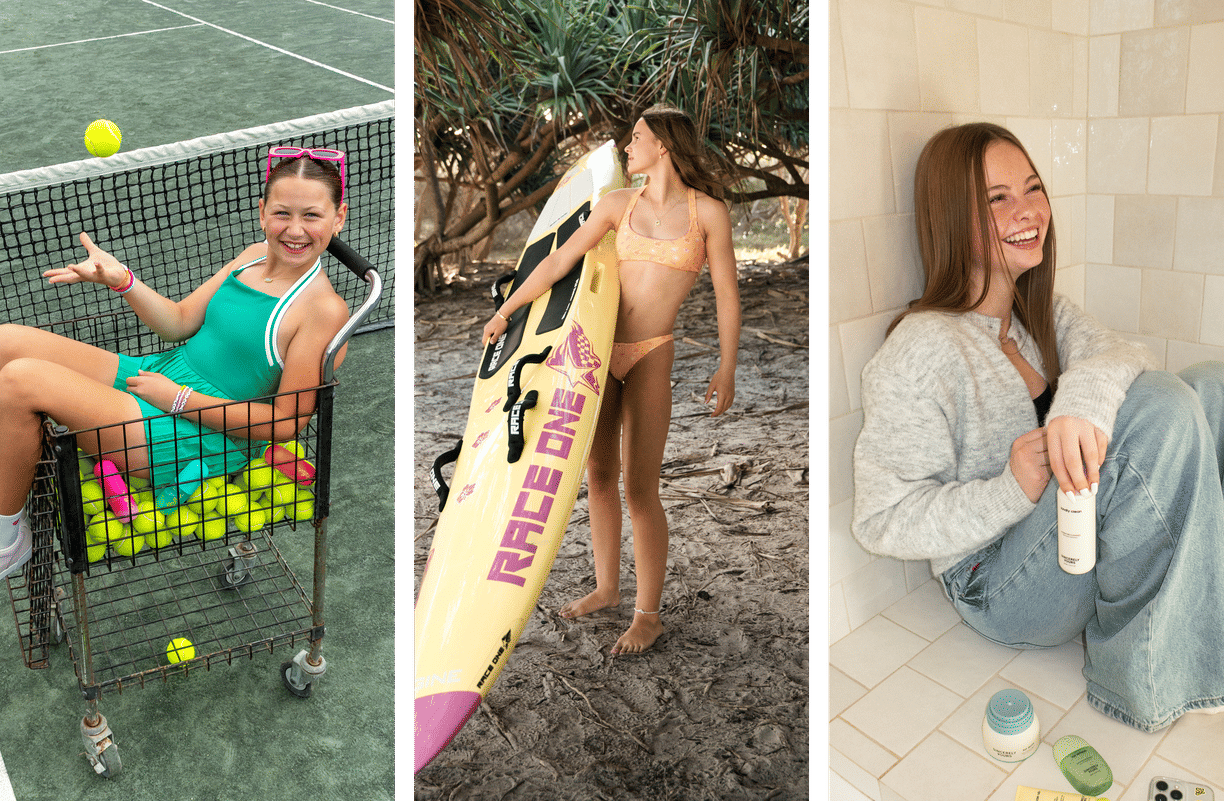
L-R: Stella Dorazio, co-founder, Stellar Beauty; Ellie Murphy, founder, Syra Swim; Salish Matter, co-founder, Sincerely Yours
Ellie Murphy is a teenager growing up on Australia’s Gold Coast, and her to-do list is extensive for a 15-year-old. Early morning surf practice, school, hanging out with friends, creating content, running Meta ad campaigns and packing up orders. She even dealt with a trademark dispute earlier this year, with the help of her parents.
Murphy is the founder of Syra, a swimwear brand. She got the idea in 2025, after an injury put her in crutches for 18 weeks. Instead of moping, she started drawing up designs and convinced her parents to loan her the AU$1,000 or so needed for the brand’s first production run.
She had spotted a problem with the swimwear normally aimed at teen girls: the designs were either childish, or too revealing. What she and her friends wanted was something that looked cool, and that they felt comfortable wearing both in the sea and on the beach, playing sport.
“I decided to create Syra to solve the problems that my friends and I had,” Murphy says.
She is one of a number of founders who are too young to open up a bank account alone, but have started a business anyway. Some share similar founding stories — 12-year-old Stella Dorazio of Stellar Beauty, for example, was playing in a golf tournament when she realized there weren’t any skincare brands catering to young athletes. Coco Granderson, 14, started Yes Day for Sephora kids just like her, and 13-year-old North West, who has built a following of teen fans who admire her alternative style, is starting her own fashion and lifestyle brand, NOR11.
It was perhaps only a matter of time. Social media has empowered Gen Alpha, currently aged between two and 16 years old, to become savvy shoppers. According to Boston Consulting Group, US teens are now collectively spending $1.5bn on makeup and $1.7bn on skincare per year. The same report found that in 2023, teen beauty spending grew 23% year-on-year, compared to 9% across the overall market. Now, some of this cohort are realizing that most brands have no idea what they really want, and that the infrastructure is there for them to do it themselves. Platforms like Shopify mean anyone can set up a webshop, and ChatGPT can find suppliers and draft business plans. Followings can easily be built on TikTok, which also serves as a marketing channel. But what is it really like to run a business before you’ve turned 18?
@yesdayworld our founder, Coco shares her guidance on our 4-step routine 🎀 🎀 start with float foam™ face cleanser to keep your skin clean + hydrated 🎀 refresh your skin with inner beam hydration mist 🎀 hydrate your skin with whip dream moisturizer 🎀 finish off by sealing in lip hydration with lip sweetie
♬ original sound - YES DAY BEAUTY
School Before Business
Murphy says she works on Syra in the evenings, on weekends, and during gaps in her school day. Her mom, Liz, provides transportation for the post office runs.
Dorazio, who is homeschooled, told Thingtesting she gets her schoolwork done by “noon or earlier,” leaving the afternoon free for writing thank-you cards to customers, dropping samples at local stores and filming content. Her mom, Mallory, is co-founder and runs much of the day-to-day, and her dad, Russell, handles operations and finances.
Salish Matter, 16, co-founded skincare brand Sincerely Yours in 2025 with her father, YouTuber Jordan Matter, and Julia Straus, an operator who runs the business day-to-day. Strauss is keen that Matter isn’t seen as simply a figurehead. It’s important, she says, for young girls to see someone like Matter on a panel and “in the room” as “a meaningful part of the business, not just the face of something.” Still, during term time, school takes priority. Straus describes a recent week in which she was planning Q4, Jordan Matter was at a YouTube conference, “and Salish was at school. I think she had a math test.” Matter’s focus is product: testing formulas and weighing in on packaging and names. “She just understands what she’s looking for as a teenager, and what her friends are looking for,” Straus says.
Paperwork Problems
Some obstacles can’t be scheduled around, though. As a minor, Murphy can’t take out business insurance or register a business name. And because Australia bans social media for under-16s, Syra’s Instagram account is in Liz’s name and lives on her phone. Murphy makes all the content, and Liz, mindful of the fact her teenage daughter and friends are the ones modeling Syra’s swimwear, keeps an eye on comments and DMs.
Murphy’s age also changes how suppliers sometimes treat her. Once they learn how old she is, Murphy says, “they just assume it’s a little thing you’re doing, and they’ll not talk to you anymore.” Then there was the trademark dispute, where Murphy was told a company with a name similar to the one she had originally chosen for her brand planned to sue, including seizing her stock and income. Finding a name nobody else was using was “very difficult,” she says. “I just kept trying until we found something that worked.” Profits from the business fund future collections, rather than giving Murphy pocket money, and the plan is to pay her parents back, too.
Each company has found its own way around the practical realities of teen founderdom. At Syra, Liz’s name goes on anything her daughter can’t sign. Stellar Beauty was set up as a family business, with Dorazio’s parents as co-founders. Mallory says some business and legal responsibilities simply have to sit with adults, and says their goal is to ensure Stella has “a real voice in the business, without putting responsibilities on her that aren’t appropriate for her age.” (They declined to share how ownership is split.) At Sincerely Yours, Straus runs operations and work fits around Matter’s timetable. Asked for examples of things Matter can’t legally do, Straus pointed instead to her schedule. “First and foremost, she’s a junior in high school.”
@syra_swim follow along and support my journey 🤍 #teenbusinessowner #salteswimwear #fyp #activeswim #founderstory ♬ Just The Way You Are - Milky & Mall Grab
How Teen Founderdom Feels
What these founders have in abundance is drive. Asked if she might ever want to step away from Stellar, Dorazio’s answer was “No!” Liz says Syra got her daughter through a very tough period, and that “something very positive came out of a negative experience.” Adults are more alert to what could go wrong, she adds. “[You think] maybe it won’t work, but she’s gone ‘I’m doing it anyway.’”
That enthusiasm, which doesn’t yet have years of work experience to temper it, can also leave these founders more exposed to burnout than adults. Dorazio’s parents say golf practice, tournaments, friends and Stellar all compete for their 12-year-old’s attention. Mallory says the aim is to give her “a real seat at the table while still letting her be 12,” which includes learning when to “put Stellar away” and just enjoy family time. If she ever does de to step back, they’d support it. Sincerely Yours takes a similar line. Whether Matter takes on more responsibilities is “really up to her,” Straus says, and they’re “taking it one year at a time.”
Liz admits she thought her daughter would only keep at Syra “for a short time,” but instead she ha juggled school, training and the business while maintaining a high GPA. “I’m super proud of how she’s juggled that in terms of time management. I wish I could be as good,” she says.
Not every part of the job is fun. Murphy likes least the part teens are assumed to be best at: making content, “and just dealing with social media.” What she enjoys is the feedback. Her customers are her friends, and they tell her things they’d never tell a big brand, which, Murphy points out, will rarely “actually talk to them, like, face to face.”
The upside is how much these teen founders can learn, and how fast. Murphy taught herself to use Canva and Adobe Illustrator, programs that no adults around her could explain to her, relying instead on YouTube tutorials and AI. Dorazio’s parents have built Stellar into their homeschooling, so product development, marketing, sales, customer relationships and finance are all part of the curriculum. Dorazio says the biggest learning so far is “the reality of how long it takes to make [the process] right.”
Straus says she isn’t sure she could have handled Matter’s role at 16. “It takes a lot of guts,” she says, noting that adults have a lot to learn from teen founders, too. She describes her working relationships with Matter as a form of “reverse mentoring.” Grown-ups, she says, tend to “write off” young people’s opinions, even though their perspectives come without the “baggage” of years watching how other brands tell their stories. “Listen really hard,” is her advice to anyone thinking of working with a teen founder.
Their businesses could lead to these teens becoming repeat founders, or be a stepping stone to a different career. For Murphy, the plan isn’t to become a full-time CEO, or a pro surfer. She wants to be an orthodontist. Still, the experience is invaluable and her advice to anyone her age is that “you’re never going to feel ready to start, but you just have to go ahead, otherwise you will never do it.”