At Thingtesting, everything we recommend is independently reviewed. We may earn a commission on purchases made through our links.
Founder interview
Hey smartphone addicts, the ’90s called — and Physical Phones answered
Cat Goetze hacked a retro corded phone so she could Bluetooth her calls through it. Then the concept went viral
In 1998, every man, woman and child in the US had access to a landline. Less than a decade later, the first iPhone arrived and the landline’s *brrring-bring!* gave way to notification pings, the marimba ringtone and, for a short but regrettable time, the Crazy Frog’s psychotic *ring-ding-ding-ding-ding-ding*.
Since then, our ability to take calls and reply to messages and emails on the go, on the loo, under our desks at work and school, or while we should be sleeping has kept increasing. Our phones now rarely leave our sides, and our behaviour is transformed. Before the smartphone, the only way to find out who was on the other end of a ringing phone was to pick it up. Today, our thumbs can hover over the green phone icon as we read the name on the screen and, for a split second, decide whether or not we want to talk.
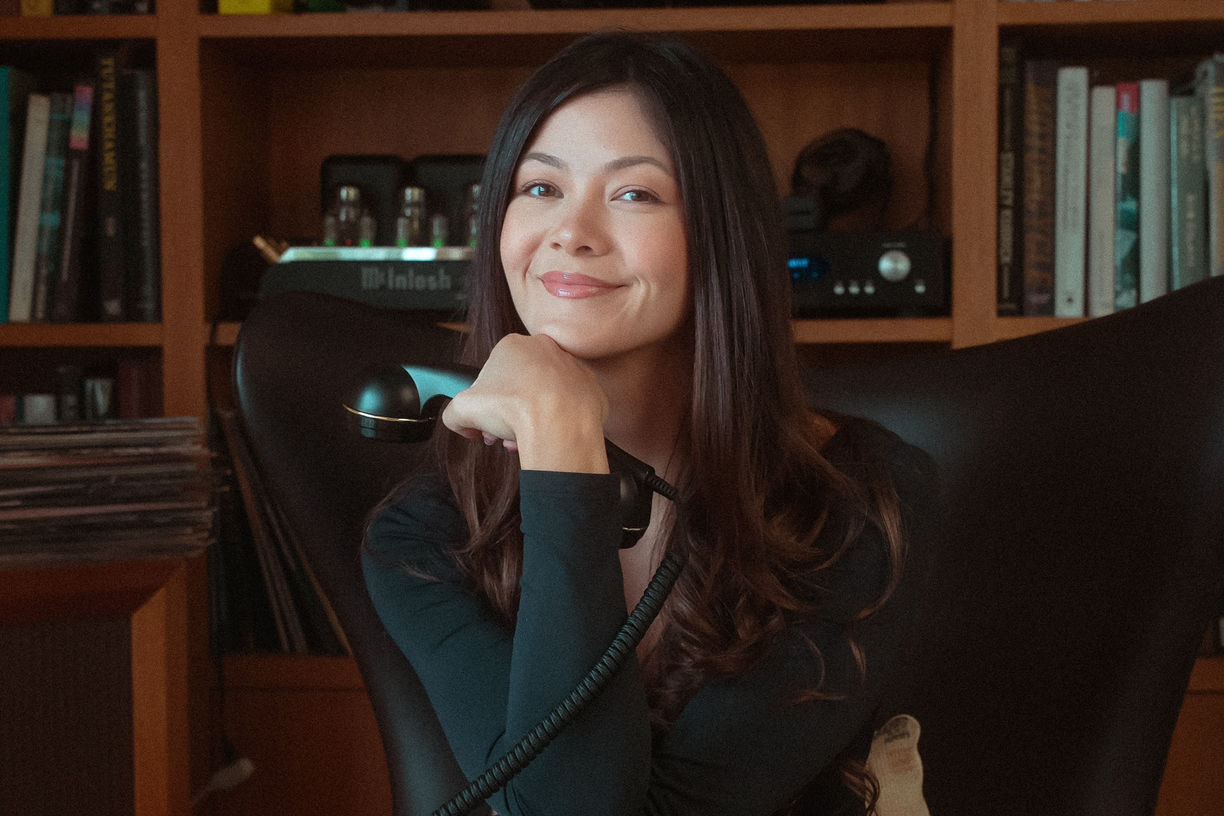
Cat Goetze, an LA-based entrepreneur who’s worked for streaming and AI platforms, has spent years thinking about how tech changes our behaviour for better and worse. In July last year, she posted a TikTok of herself with a pink corded phone — the kind your parents might have mounted to the wall, with a receiver that clicks back into place — that she’d modded with Bluetooth antenna to pick up her smartphone’s calls.
It went viral, and today her business Physical Phones has sold over 7,000 curly-corded and rotary models to Americans looking to reduce their smartphone use, including 4,000 orders over the Christmas period. “We all know we're spending more time on our phone than we'd actually like,” Goetze says. “People are craving a screen-free way to connect.”

Photo: Physical Phones
The making of a physical phone
Goetze built the first Physical Phone over two years ago, after trying the usual steps to cut down her screen time (turning her screen to grayscale, not scrolling before bed), plus a few left-field ones (swapping her phone for a piece of see-through acrylic in the same shape). She looked into getting a landline, but it was expensive at $70 a month, and she wasn't sure her friends would actually use the new number that came with it. So instead, she got tinkering, and learned how to hook up a landline's RJ11 jack — the square plastic one that, if you recall, plugs into a wall socket — to adaptors that gave it Bluetooth connectivity. “It was pretty clunky and had a lot of cords,” Goetze says. “But it worked.”
The Physical Phones brands came together more quickly. Goetze posted a pre-order link for TikTok fans who’d expressed an interest, and 1,000 orders were placed in three days. She found a manufacturer and got to work. Unlike Goetze’s original hacky model, the Physical Phones sold today contain the Bluetooth tech inside the shell and are rechargeable via USB-C.
The infinite scroll toll
Goetze’s journey to cut down her screen time — which she posts about on her @CatGPT Instagram and TikTok accounts — after seeing it skyrocket during the pandemic is one many of us can relate to. Over 500,000 people are now following her on TikTok for advice on how to moderate their own tech usage.
One experiment to not touch her phone for the first 30 minutes of each day reduced her screen time by about 20%, Goetze says. The enduring goal is to reduce the number of times she picks up her phone every day, which is how the mindless scrolling starts. One California State University professor estimates that, based on his eight years of research, people pick their smart phones up between 50 and 100 times a day, while other studies have found that frequent interruptions like these diminish our ability to focus or remember things.
Goetze says shortcircuiting this cycle is the number one benefit of using her phone less in the mornings, and it has in turn “improved literally every facet of my life: my friendships, the quality of my relationships, the quality of my work”.
“Without even trying, it has this ripple effect on the rest of my day,” she explains. “I look at my smartphone less and feel more grounded, present and focused throughout the day. It’s the single [most effective] behavioural change and it’s had a domino effect on the rest of my life.”
Friction for the win
Physical Phones' early success comes at a time when many of us are reflecting on how we interact with the technologies that are snowballing their way through our lives, starting with smartphones but now extending to things like AI chatbots, algorithms designed to keep us endlessly scrolling through shortform video, and games that exhaust our dopamine receptors. A May 2025 survey in the UK found that almost half of people aged 16 to 21 wish they’d grown up without the internet.
But these technologies aren’t going anywhere, so Goetze says we’ll have to find a way to live with them. Sometimes that means adding a bit of friction back in to encourage moderation, and accepting that things don't always need to be as convenient as our smartphone apps make them. Even the Physical Phone takes some getting used to, says Goetze, who has surprised a few callers by asking who they are (most people assume you've already seen it's them on your phone screen). Where people prefer communicating over text, the switch to phone calls takes conscious effort.
In the process, some interesting use cases are emerging, Goetze says. Parents, worried about the impact of screen time on young brains, see landline-like phones as a safe way for children to connect with other young friends, or even a tool to encourage calls to grandparents more often.
“It’s easy to think ‘ugh, I miss the ’90s when we just talked on the phone and you weren’t getting distracted by a scroll’,” Goetze says. “That’s what drives people to the product. It’s like ‘OK, I can recreate that experience in a way that’s actually compatible with modern life by leveraging my smartphone’s number and not having to find that weird plug in the wall that some apartments don’t even have any more.”