At Thingtesting, everything we recommend is independently reviewed. We may earn a commission on purchases made through our links.
Modern Brands Are Getting in on the Mahjong Boom
As interest in the table-top game peaks in the US, new wave of brands is getting into the business of mahjong, one hand-painted tile at a time
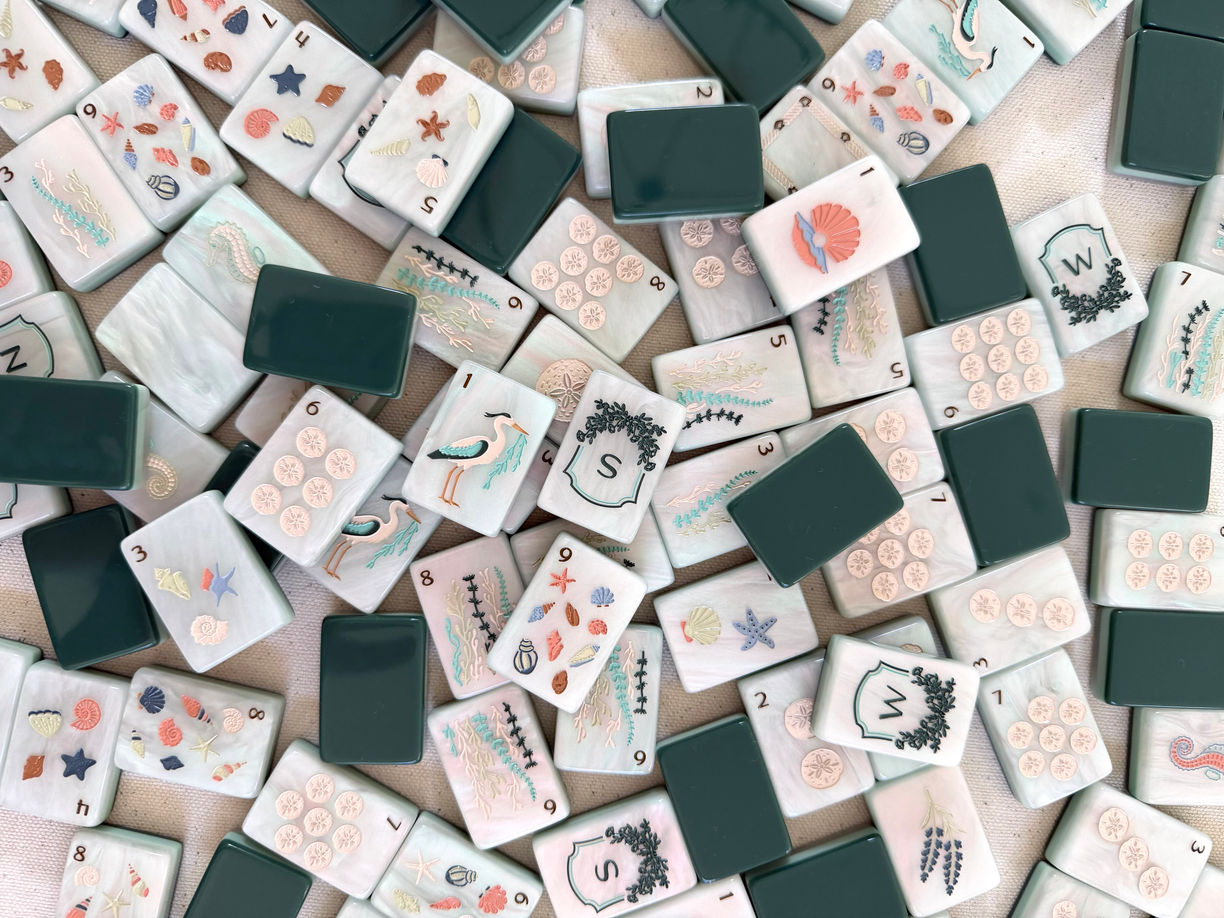
Image: Lucky Daughters
Across America, people are going mad for mahjong. The game is being played in the dimly lit backrooms of Washington, DC restaurants, at country estates in Dallas, and by A-listers in LA. According to Yelp, searches for mahjong clubs rose 4,400% in the year to August 2026.
Brands are keen to get involved. Luxury houses from Hermès to Prada and Ralph Lauren have all released their own take on the tile set in the last year or so, with Louis Vuitton’s monogrammed trunk retailing at around $62,500. Independent brands are chasing design-forward American mahjong players with beautiful sets at a less eye-watering price. Haute Mahjong launched in July with tiles featuring evil eyes and bold red tomatoes — popular motifs also seen at retailers like Anthropologie — and velvet-lined tile bags. In January, Mahjong Row & Co released its “heirloom” mahjong sets, created in collaboration with Taiwanese-American creative director Monica Lo and designed to double as home decor. Its first run of tile sets sold out in two weeks.
Lucky Daughters, which launched in June, was started by three Vietnamese-Chinese-American sisters. Their designs are influenced by their mixed-heritage background. The East Coast Sands set’s tiles, for example, features sand dollars and sea shells in a nod to family summers spent in Cape Cod. The Auntie’s Table tiles depict ladies in hair rollers, drinking cocktails and hiding behind folding fans — an homage to the sisters’ real life aunties.
“Some people may look at our artwork and say, these aren’t traditional tile sets,” says co-founder Nina Truong. “It’s controversial. But our stance has been that it’s OK for people to play styles that have been adapted, [like] American mahjong. It comes down to paying respect to where the game came from.”
Truong and her sisters grew up playing Hong Kong-style mahjong, but Lucky Daughters has launched with American-style sets — 160 tiles apiece — with plans to add Hong Kong and Taiwanese variants, plus an academy that will teach people to play each style.
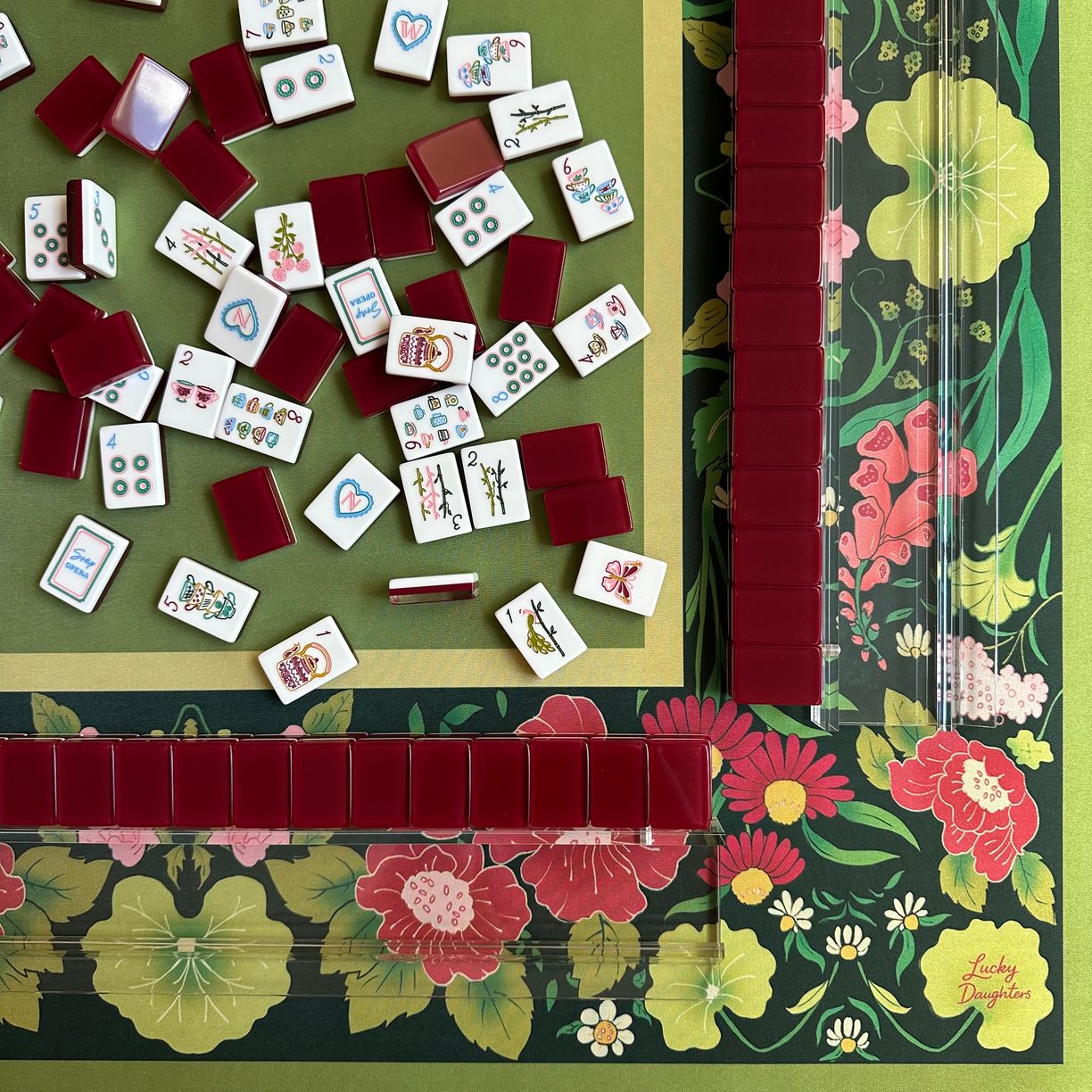
Image: Lucky Daughters
Mahjong Manufacturing
Design is one thing, but bringing the tile sets to life is another. When Lucky Daughters started, the sisters had wanted to make melamine tiles — the material traditionally used in China, where mahjong originates — in a shade of brown their late grandfather loved. But unlike acrylic, the material most American-style tiles use and which can be matched to any Pantone swatch, melamine comes in a far more limited range of colors. Custom-making the brown tiles would require a minimum order of up to 2,000 units — which is why the brand launched with acrylic sets first, where minimum orders start at 500 units; a much more reasonable quantity for a small brand that’s just starting.
Then there’s the artwork. Each tile, acrylic or melamine, is individually engraved and painted by hand, 160 times per set.
These production complexities are why mahjong brands are so often sold out of their most popular sets, and why pre-ordering is the norm when shopping.
“There’s a crazy amount of work that goes into creating a tile,” says Truong. “Pre-ordering works very differently in mahjong. We put down a deposit to secure the inventory, but because it can take 90 to 120 days to get those back, a lot of [brands] will put them up for sale to see if there’s demand to place another order and start that lead time again,” says Truong.
Mahjong’s moment has arrived at a time when people are craving ways to get off their screens and socialize in real-life — while, of course, still documenting content for social media. Mahjong's hand-painted tiles and color-matched mats lend themselves to posting, as does the pleasing swish and clack of tiles being shuffled on a glossy playing mat.
“If it weren’t for some of these small influencers in the mahjong community, it’d be very hard for brands like [Lucky Daughters] to have taken off the way it has done,” Truong says.
Lucky Daughters’ own social following is modest, but at the time of writing, its East Coast Sands sets remain sold out.