At Thingtesting, everything we recommend is independently reviewed. We may earn a commission on purchases made through our links.
How Young Brands Bring New Inventions to Market
Nice packaging is no longer enough to stand out. Now, founders are striking deals with manufacturers to combine branding know-how with new innovations.
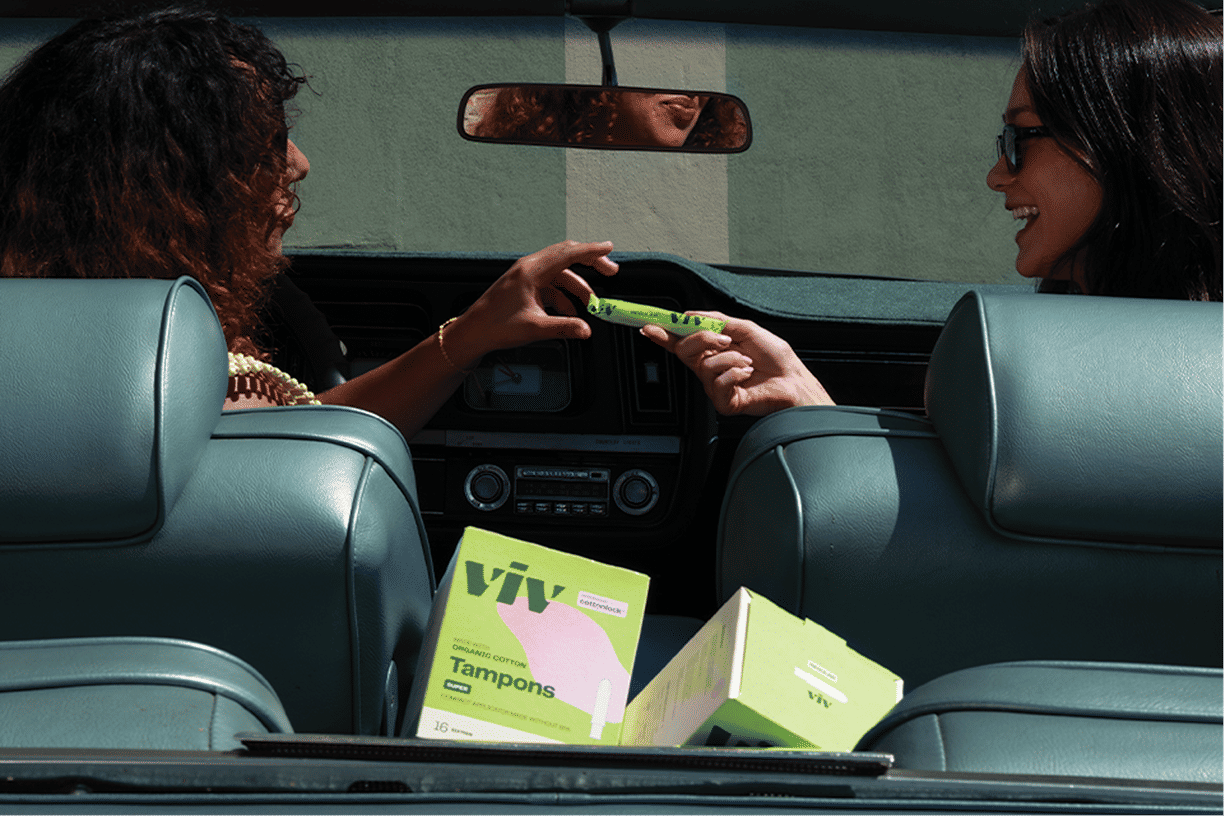
Image: Viv
Every year in the US, tens of thousands of new products launch and millions of new businesses are registered. Indeed, it has never been easier to launch something new. The internet has put suppliers just a Google search away, no matter where in the world they are based, while platforms like Pietra, Shopify and Zendrop have made things like inventory, webshops and logistics a doddle. Agencies like Red Antler, Day Job and Mythology can spin up good-looking packaging and great-sounding stories, while the trend to “build in public” is inspiring a new generation of would-be brand founders to put themselves out there.
But as the universe of brands has become more saturated, the standard formula of taking aim at an unloved category and selling it as a lifestyle choice has run its course. Standing out on social media, now awash with AI slop, is harder than ever and paid ads are no easier. Meta’s prices keep climbing, with median costs per thousand impressions up 20% in 2025 alone, according to Influee.
“We’re in a really interesting time where it’s never been easier to launch a brand, but it’s harder than ever to maintain and scale [one],” says Katie Diasti, co-founder of period care brand Viv.
For the past decade, much of the innovation in consumer brands happened in packaging and storytelling, as founders put prettier handles on razorblades, found new ways to box up bulky mattresses, and sharpened messaging around categories like alcohol-free beer and oat milk. Founders launching today, though, have realized that branding alone is no longer enough to set themselves apart, and are now asking what they can sell that’s meaningfully new for consumers. But as young brands with shoestring budgets, how can they afford to bring a new invention to market?
Reinventing the Tampon
Viv’s solution was to team up with a manufacturer that had developed a new kind of tampon, but had no route to US customers. Viv launched in 2022 as a better-for-you period products brand, selling cups, discs, pads, and tampons with BPA-free applicators. It has built a solid audience on social media (on TikTok, Viv’s content has 2.3m likes) by posting educational videos covering topics like how to use a tampon or menstrual cup. But an online following only counts for so much when retail buyers are deciding which brands gets shelf space.
“When we bring that to a retail buyer, it isn’t enough anymore,” says Diasti. “We need innovation.”
That innovation ended up being Cottonlock, developed by Cohitech, Viv’s manufacturing partner in Spain. The patented technology is essentially a veil of organic cotton that is wrapped around the tampon’s absorbent core to stop fibres shedding. Diasti says if you press a bit of sticky tape on a normal tampon, you can see the fibres peel off it, while the same experiment with Cottonlock yields nothing.
Cottonlock was already on shelves in Europe, but Cohitech had not yet found a way into the US, a far larger market. “They hadn’t been able to scale [here] yet, and for many manufacturing partners, that’s the dream,” says Diasti. Since tampons are considered a medical device in the US, Viv worked with Cohitech to secure FDA clearance, a process which took several years.
Viv already had a foot in the door at Whole Foods, which began stocking its cups and discs in 2025. This year, the retailer added six more Viv products, including Cottonlock tampons in three absorbencies, taking the brand to 11 SKUs in stores nationwide.
Since launching the Cottonlock tampons, Viv says velocity (the number of units sold per SKU per store each week) has risen sevenfold. Monthly sales are up 13x and weekly units 11x. Viv is now rolling out Cottonlock tampons nationwide at Sprouts, and in September it raised $2m from angel investors to support its expansion.
Viv also holds an exclusive license to sell Cottonlock tampons in the US until 2027, which it hopes to extend based on the strong sales data Viv is seeing. Diasti maintains a close relationship with Cohitech, with weekly calls and visits every couple of months.
Theoretically, other US brands could start selling Cottonlock themselves at some point in the future, and Diasti expects competitors to follow. “As a small brand within periodcare that doesn’t have big conglomerate budgets, we get copied all the time,” she says. “It’s a matter of when and not if. That’s why we focus on being a first mover.”
Filtering the Noise
Dutch earplug brand Hears also built its flagship product with a manufacturing partner. Co-founders Bob Verlaat and Nick Nijhof had previously started sleep brand Dore & Rose, which sold silk pillowcases and eyemasks. It grew to a decent size, but Verlaat says it was hard to position the brand as special when so many others were selling similar products.
“We said if we launch a new business, let’s create something no one else can copy,” he says, adding that with Hears the founders opted to pursue a development timeline of “two years instead of going straight to China” to find something readymade.
Verlaat had no background in hearing protection, and says he spoke with audiologists, musicians and designers before partnering with Elacin International, a Dutch company that makes acoustic filters designed for factory workers wearing custom-molded earplugs. The membrane reduces highs, mids and lows evenly, so music sounds quieter instead of muffled, according to Verlaat. Together, Hears and Elacin redesigned the technology to fit a universal earplug. “It’s been quite a challenge,” says Verlaat. “The filter is not the only thing that matters, there’s a whole acoustic experience.”
While Elacin started out as a supplier of Hears, after two years of working on the earplugs together, Verlaat says it became a shareholder and that Hears has the exclusive rights to the patented filter. In Hears’ own testing, says Verlaat, its earplugs preserve around 93% of natural hearing, compared to competitor products which he says can only manage around 60%.
Hears funded its two years of development with money from angel investors, leveraging the founders’ previous experience with Dore and Rose as proof the they knew how to sell products online. “It’s super hard to get funding for something that doesn’t exist yet,” he adds.
Verlaat says founders building today have two routes they can take. The fast one, as he did with Dore & Rose, or the slow one he took with Hears. “Neither is right or wrong, but the second is what I believe will last longer.”