At Thingtesting, everything we recommend is independently reviewed. We may earn a commission on purchases made through our links.
STRIV Founder Axl Chen Invented a Sensor-Packed Smart Sole to Stop His Repeated Running Injuries
Axl Chen loves running, but was always injuring himself doing it. So he designed a smart sneaker insole that could tell him, and other runners, how to improve their form
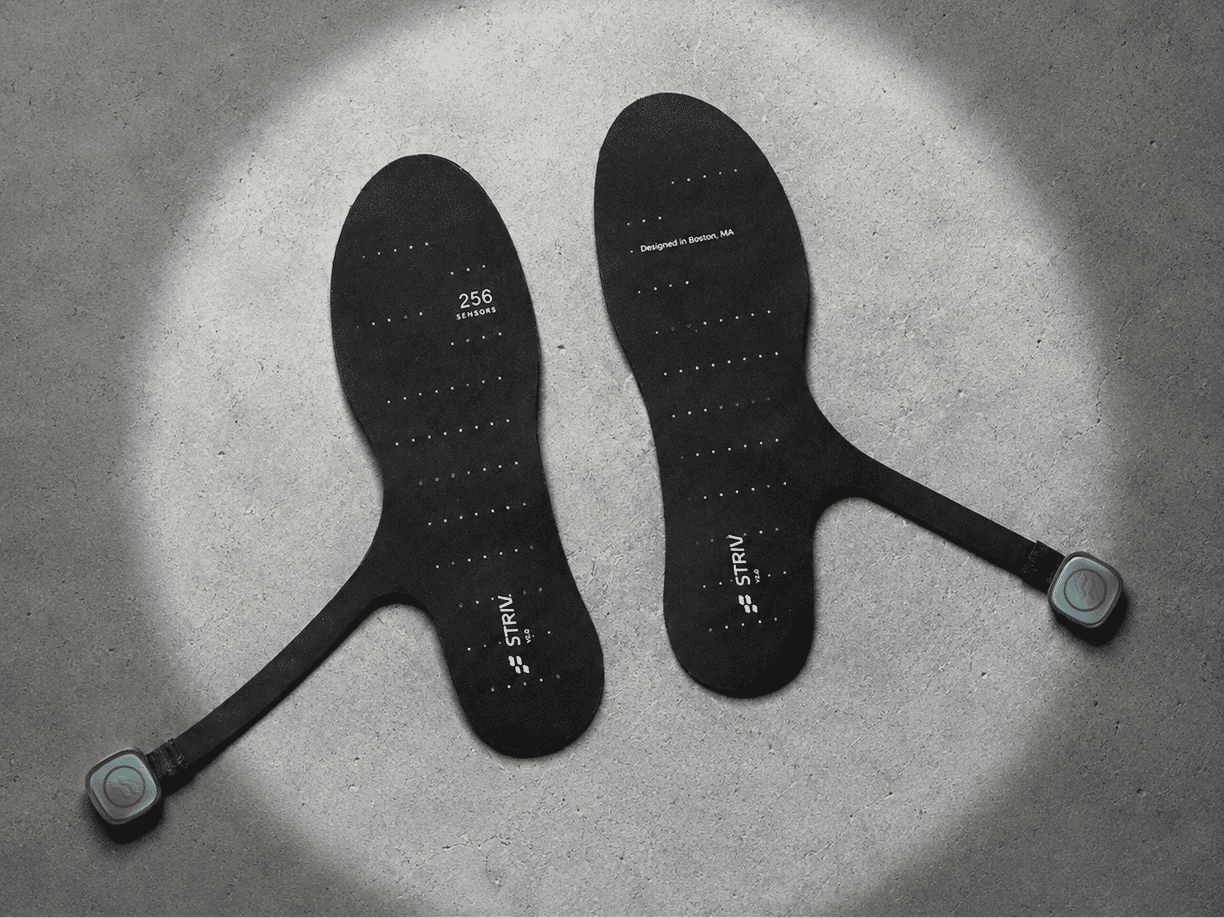
Image: STRIV
28-year-old Axl Chen started running in high school, and hasn’t stopped getting injured since. He’s had shin splints more times than he can count, and his ankle sprain tally is now up to five. He’s tried different styles of running, from cross-country to track, but the same injuries kept coming up. The advice from physios was always to give the running a rest — but Chen wanted to know was why he was getting injured in the first place, and what he could do about it.
For the past four years, Chen has been developing a sensor-packed sneaker insole that tracks exactly what’s happening underfoot, and which flags the patterns that might lead to a future injury. Now the lab project has become a product, with Chen’s new brand STRIV, which launches in mid-October.
“I love running,” he says. “And I’ve never wanted to stop. I just needed to understand why my body kept stopping me.”
From Robots to Running Shoes
In 2021, Chen was doing working at Tsinghua University's robotics lab in Beijing, trying to fit pressure sensors onto robots. It struck him that if a sensor could tell a robot how it was moving through the world, the same technology could tell a person. He thought of his own running woes, and wondered if it could give people enough insight into how their feet hit the ground that they could make adjustments to their gait or training plans and stop an injury before it happens.
“I got super excited about how we can combine an AI system and this sensor technology to better know your body,” he says.
STRIV’s debut product is a pair of insoles packed with 256 individual pressure sensors (128 per foot). Chen says it’s a denser sensor array than anything comparable on the market — the now-defunct UK’s Nurvv Run, for instance, used 32 sensors according to reviews — meaning STRIV can track not just where and how hard a foot strikes and pushes off the ground with each stride, but also data points like shifts in cadence and stride length. As well as the insole, a small sensor pod clips to the side of the shoe and syncs the data to the runner’s phone via bluetooth, feeding into an app with an interface that will be familiar to anyone who’s used a fitness tracker before. Chen says the battery lasts for around two weeks of regular use before it needs recharging.
Putting sensors into an insole isn’t straightforward though — sensors are typically not designed to be slammed repeatedly against the ground, and the first prototypes Chen strapped to a human foot broke almost immediately. Five iterations later, Chen says STRIV’s insoles can withstand over 500 miles of running. The engineering challenge, Chen says, is padding. Too much and the sensors can’t detect what’s going on outside of their cocoon; too little, and they shatter.
“It’s been a nightmare,” Chen says. “You can’t put too much material under the foot, or you stop being able to feel anything. It’s a fine line we’ve been trying to walk.” To get there, Chen says STRIV has gathered a pool of everyday testers logging regular mileage in all conditions, including extreme weather, rather than relying on lab conditions alone.

Image: STRIV
A New Kind of Wearable Tech
STRIV’s hardware is impressive, but the real sell is not just the smart insole but the pattern-spotting app that it comes with.
When new users are onboarded, Chen says the app asks for a runner’s injury history and training goal, then starts using the data gathered from the insole to build a personal baseline for that user, which reflects how they usually move. From there, any potential problems — a footstrike that gets wobbly as fatigue sets in, or how stride length shifts as mileage builds towards a marathon — are flagged. A “form score” gives runners a live number to reference mid-run, and a warning that an overuse injury could be on the horizon.
“Current wearable sensing systems are more about telling you how your body is doing — your physiology, your cardiovascular system,” Chen says. “It doesn’t really tell you how you are moving.”
To justify its claims, STRIV has hired a biomechanics lead, Lauren Baker, who holds a PhD in biomechanics from Harvard and runs lab studies for the company, including fatigue tests where runners are brought in to run until they are exhausted, so the team can identify what fatigue looks like in the data the insoles are collecting. “Everyone moves so differently,” Chen says of observing these tests. “It’s like a running fingerprint.”
Injury is a problem most runners experience, meaning STRIV has plenty of people to target. A 2009 clinical review from Sports Journal found that studies put the share of runners who pick up some kind of injury each year at around 70%, most commonly through overuse.
Early Traction
Chen says STRIV picked up 2,000 testers in 2025 through a Kickstarter campaign, including, he adds, a handful of Olympic-level athletes who were interested in how the product could complement their training. Chen references one runner based in Australia, recovering from ACL surgery, who wanted to know if STRIV could provide real-time coaching to safely rebuild the strength and stability they'd lost.
The business model is straightforward. A full set of insoles and sensor pods will sell for $399, with hardware replacement covered for the first 500 miles of wear, after which only the insoles need replacing. There is no subscription model for now, though Chen says a future “pro” AI coaching tier is possible as model costs rise. The company has 30 employees and has raised a seed round, the value of which has not been disclosed, Chen says. The product is currently available for pre-order, and officially launching in mid-October.
After years of injury, Chen achieved a personal running breakthrough this year. He completed his first ever half marathon in New York; something he would have thought impossible given a previous injury record.
“The biggest thing I’ve learned is that I was increasing my speed too much, which led me to overstride,” he says. “Now I focus on keeping my cadence consistent, and that’s what let me build up my mileage instead of getting hurt.”